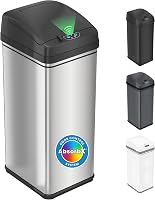
6 Best Touchless Trash Cans (October 2026)
The best touchless trash cans include the EKO Mirage-T 13 Gal Sensor Can for everyday kitchens, the iTouchless 13 Gal Pet Lock Sensor Can for homes with pets, and the Ninestars 21 Gal XL Sensor Can for busy shared kitchens.
On this page (8 sections)
- How we chose these touchless trash cans
- The best touchless trash cans by use
- How much capacity does your kitchen actually need?
- Where should a sensor trash can stand?
- Which lid controls and power options are worth choosing?
- How do you set up a touchless trash can properly?
- How do you keep a touchless trash can clean and working?
- Which touchless trash can should you choose?
The EKO Mirage-T 13 Gal Sensor Can is the best touchless trash can for most kitchens because it fits standard bags and has a stay-open option for food prep. Choose the iTouchless 13-gallon model when a manual pet lock matters more, or a larger can when daily waste fills your current bin too quickly.
The right choice depends on where the can will stand, how you fill it and who empties it. Extra capacity helps with bulky waste, but a smaller bag is easier to carry and encourages you to remove food scraps sooner.
For more options across lid styles, see our best kitchen trash cans for sensor, step and dual styles.
Our picks at a glance
-
1

-
2
-
3
- 4
 Check it
EKO Mirage X 21 Gal Sensor Can
Best for longer cleanup sessions - 5
 Best for high-volume work areasCheck it
- 6
 Check it
EKO Matte Stainless 13 Gal Sensor Can
Best for matte-finish kitchens
How we chose these touchless trash cans
We compared usable size, lid controls, bag fit and power needs, giving priority to features that solve a clear kitchen problem. The top pick suits a regular kitchen routine; the others address pet access, heavier waste volume, longer cleanup tasks or a preferred finish.
Capacity alone doesn't decide the order. A larger can needs to earn its floor space, and a manual lock only helps if someone remembers to engage it.
The comparison below puts the main measurements and power options together. Use it to rule out cans that won't fit before reading the individual recommendations.
| Product | Best for | Capacity | Dimensions | Power | Our score |
|---|---|---|---|---|---|
| EKO Mirage-T 13 Gal Sensor Can | everyday kitchens | 13.2 gal | 15.1 x 10.2 x 24.6 in; allow 36 in open height | AA alkaline batteries | 8.2 |
| iTouchless 13 Gal Pet Lock Sensor Can | homes with pets | 13 gal | 12.7 x 10.8 x 27.3 in | 4 D batteries or optional AC adapter | 8.1 |
| Ninestars 21 Gal XL Sensor Can | busy shared kitchens | 21 gal | 18.78 x 14.45 x 27.4 in | 3 D batteries | 8.1 |
| EKO Mirage X 21 Gal Sensor Can | longer cleanup sessions | 21.1 gal | 18.5 x 11 x 27.1 in | Confirm power requirements before buying | 7.9 |
| iTouchless 24 Gal Sensor Can | high-volume work areas | 24 gal | 17.4 x 12.3 x 33 in | 4 D batteries or optional AC adapter | 7.9 |
| EKO Matte Stainless 13 Gal Sensor Can | matte-finish kitchens | 50 L | 15.5 x 10.6 x 24.6 in | AA alkaline batteries | 7.4 |
The best touchless trash cans by use
Choose the Mirage-T for everyday use, then move to another pick only when it solves a specific problem in your kitchen. The write-ups below explain who benefits from each model and who should choose something else.
EKO Mirage-T 13 Gal Sensor Can: Best for everyday kitchens
- 13.2 gal capacity
- Fingerprint-resistant brushed stainless steel
- Soft-close lid
- Stay-open lid option
A rectangular can for everyday kitchen waste, with standard bag fit and a stay-open option for food prep. Allow room above it for the lid to rise.
Pros
- Stay-open option for longer tasks
- Fingerprint-resistant finish
- Fits standard 13-gallon kitchen bags
Cons
- Batteries are not included
- Requires alkaline batteries rather than rechargeable ones
Best touchless trash can for everyday kitchens: EKO Mirage-T
The Mirage-T suits cooks who want to discard scraps without lifting a lid and keep the opening available during a longer prep job. Its touch switch holds the lid open, while the soft-close action brings it down gently afterward.
An inner rim holds the bag in place and hides its edge. That matters during cleanup because a loose bag mouth can slip inward as you scrape food into the can.
It uses standard 13-gallon kitchen bags, so you can keep buying a familiar bag rather than changing to a custom liner. Avoid cramming trash tightly into the body, since that makes any full bag harder to remove.
Plan around 15.1 x 10.2 in of floor space and 36 in of open-lid height. EKO provides slightly different body measurements, so using the larger footprint is the sensible choice for a close fit.
EKO says AA alkaline batteries can last up to 8 months; batteries aren't included, and rechargeable ones aren't suitable. Skip this pick if overhead space is tight or you need a lock that disables opening.
If capacity is your main uncertainty, our kitchen trash can size guide explains how gallons and liters compare.
iTouchless 13 Gal Pet Lock Sensor Can: Best for homes with pets
- 13 gal capacity
- Manual lid lock
- Included carbon odor filter
- Soft-close lid
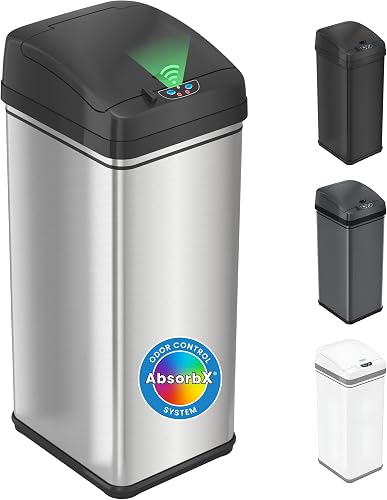
Choose this model when you want to disable automatic opening around pets. Its included carbon filter adds odor control, while standard kitchen bags keep refills simple.
Pros
- Manual lock disables lid opening
- Carbon odor filter included
- Fits standard 13-gallon kitchen bags
Cons
- Lock must be engaged by hand
- D batteries are not included
iTouchless Pet Lock for homes with curious animals
The iTouchless Pet Lock is the better choice when an automatic lid could give a curious pet easy access. Its manual lock disables lid opening, so a nearby animal can't simply trigger the sensor while that control is engaged.
The trade-off is a change in routine: you must release the lock to resume automatic use. Put the control within easy reach so locking the can becomes part of leaving the kitchen.
Its standard kitchen-bag fit and retainer ring suit everyday household use. The included AbsorbX carbon filter adds odor control, though food waste still needs prompt removal.
Power comes from 4 D batteries or an optional AC adapter. Choose battery power for a clear floor area, or consider the adapter where an outlet is nearby and the cord can stay out of the walkway.
Buy this model for controlled access rather than extra volume. Skip it if your pet tips bins over, or if nobody in the household will consistently use the lock.
For a practical odor routine, read how to keep a trash can from smelling.
Ninestars 21 Gal XL Sensor Can: Best for busy shared kitchens
- 21 gal capacity
- Motion-activated lid
- Fingerprint-resistant 430-grade stainless steel
- Included liner ring
A large sensor can for shared kitchens that fill a regular bin too quickly. Choose it when you have open floor space and need room for higher daily waste volume.
Pros
- Room for larger daily loads
- Fingerprint-resistant steel
- Removable lid and included liner ring
Cons
- Broad footprint needs floor space
- Batteries are not included
Ninestars XL for busy shared kitchens
The Ninestars XL suits a shared kitchen where packaging and everyday waste fill a regular bin before cleanup is finished. Its 21-gallon capacity gives those larger daily loads somewhere to go without balancing trash above the rim.
This is a floor-space decision as much as a capacity decision. The body is broader and deeper than the smaller picks, so leave room for people to pass while someone stands at the opening.
The removable lid and included liner ring help with bag changes. Before filling a new bag, seat it evenly around the ring and make sure its bottom reaches down into the body.
It requires 3 D batteries, which aren't included. Ninestars says battery life can reach 6 to 9 months, with actual replacement timing depending on use.
Choose it for a busy indoor kitchen with room for a large bin. Skip it if you mainly discard wet food scraps, because extra storage won't remove the need to empty those promptly.
Our best motion sensor trash cans for the kitchen offers another way to compare sensor-focused choices.
EKO Mirage X 21 Gal Sensor Can: Best for longer cleanup sessions
- 21.1 gal capacity
- 20-minute stay-open setting
- Fingerprint-resistant brushed stainless steel
- Soft-close lid
A large can with a timed stay-open setting for clearing counters or sorting recycling. Its shallower body offers a different fit from the Ninestars.
Pros
- 20-minute stay-open setting
- Fingerprint-resistant finish
- Can serve as a recycling bin
Cons
- Long body needs a suitable wall space
- Power requirements need confirmation
EKO Mirage X for longer cleanup tasks
The Mirage X suits people who clear several counters, unpack groceries or sort recycling in one session. Its press-to-open control holds the lid open for 20 minutes, reducing the need to trigger the sensor for each item.
That setting is most useful when you're staying beside the bin. A closed lid is preferable between tasks, especially when food waste or curious pets are nearby.
The body offers roughly the same capacity class as the Ninestars in a shallower shape. Choose between them by measuring the space you can spare rather than assuming all large cans fit alike.
You can use this model for trash or recycling, but it remains a single container. Mixing both streams inside it creates another sorting job later.
Choose the Mirage X when you need a large opening available throughout cleanup. Skip it if you only discard one small item at a time, since the timed hold-open feature adds less value to that routine.
Confirm the model's power requirements before buying, particularly if your planned position depends on a certain power source.
iTouchless 24 Gal Sensor Can: Best for high-volume work areas
- 24 gal capacity
- Included carbon odor filter
- Tall oval body
- Fits standard 24 to 30-gallon bags
The largest pick suits indoor spaces that produce a lot of trash each day. Its height makes open placement a better match than a spot beneath a counter.
Pros
- Largest capacity in this roundup
- Carbon odor filter included
- Optional plug-in power
Cons
- Tall body needs overhead clearance
- Batteries and optional adapter are sold separately
iTouchless 24 Gal for high-volume indoor areas
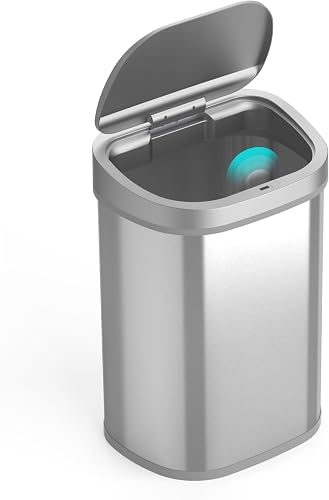
The iTouchless 24 Gal suits a high-volume indoor space where even a large kitchen bin fills too quickly. Its 24-gallon capacity is the largest here, making it a better match for bulky daily waste than a low-waste household.
The tall oval body needs an open position with room above the lid. Its 33 in body height also matters when you lift a full bag out, since the bag must clear the rim before you can carry it away.
Standard 24 to 30-gallon bags fit this model. Choose a bag that sits properly in the body rather than relying on the gallon label alone.
It includes a carbon odor filter and runs on 4 D batteries, with a separately sold AC adapter available for plug-in use. The batteries are also separate.
Choose it when waste volume justifies a tall can and the person emptying it can handle the load. Skip it if bags already become too heavy before they're full.
For a wider look at powered lids, see our automatic trash can guide.
EKO Matte Stainless 13 Gal Sensor Can: Best for matte-finish kitchens
- 50 L capacity
- Matte stainless steel finish
- Fingerprint-resistant surface
- AA alkaline battery power
A kitchen-size sensor can for buyers who prefer matte metal. Choose it for that finish rather than expecting the same lid controls as the Mirage-T.
Pros
- Matte stainless steel finish
- Everyday kitchen capacity
- Fingerprint-resistant surface
Cons
- Requires AA alkaline batteries
- Larger footprint than the Mirage-T
EKO Matte Stainless for a coordinated kitchen
The EKO Matte Stainless suits buyers who want everyday kitchen capacity and prefer a matte metal surface beside their cabinets or appliances. Its 50-liter capacity falls in the same size class as the Mirage-T.
Finish is the reason to choose this model. Don't assume it includes every lid control found on another EKO can just because the capacity and overall shape look similar.
The fingerprint-resistant surface can reduce visible handling marks, but the area around the opening still needs regular wiping. Scraps on the rim matter more to cleanliness than a few marks on the body.
Its footprint is slightly larger than the Mirage-T, so measure your intended spot even if you're replacing another kitchen-size bin. Also leave space above the closed body for the lid to rise.
It uses AA alkaline batteries, and EKO says they can last up to 8 months. Choose it if the matte finish settles your decision; skip it if a stay-open control or manual lock is a must-have feature.
How much capacity does your kitchen actually need?
Choose capacity by how your current bag fills, rather than household size alone. A home that separates recycling and food scraps may need less trash space than a smaller household that puts everything into one bin.
Watch your routine for several days before sizing up. Note whether you empty the bag because it's full, heavy or starting to smell.
Stay smaller when weight or odor sets the limit
A larger can won't help much if you already remove partly filled bags because they contain wet scraps. It can instead tempt you to leave that waste indoors longer.
A kitchen-size can also makes sense if carrying bags downstairs or out to a distant collection point is difficult. You can empty a larger bin early, but then its extra floor space serves little purpose.
Size up when bulk causes overflow
Extra room helps when light packaging fills a bag quickly or several people use the same bin throughout the day. Separate recyclable material first so you aren't buying a larger trash can to store items that belong elsewhere.
Keep the maximum load manageable for whoever takes it out. Don't press down on waste to gain space, especially when the bag may contain sharp edges.
Where should a sensor trash can stand?
Place it where the sensor, lid and bag-removal path stay clear. A spot that fits the closed body may still fail when you open a drawer, walk past the sensor or lift out a full bag.
Measure the floor area, then check the space above and around it. Leave practical room to remove the lid and clean behind the body without shifting nearby furniture.
Check the whole opening path
Don't slide an upward-opening sensor can beneath a low counter just because its closed height fits. Contact with the counter can interrupt lid movement and leave you with an awkward place to discard waste.
Also check nearby handles, cabinet doors and pull-out shelves. A can should remain usable while you're cooking, rather than blocking the drawer that holds your utensils.
Keep the sensor away from passing movement
A narrow walkway can put people within the sensor's detection area each time they pass. Try a position beside the prep area where a deliberate approach is easy and routine foot traffic stays farther away.
Avoid storing a hanging towel, bag or other moving object directly over the sensor. Our guide to where to put a trash can in a kitchen helps you weigh access against floor space.
Which lid controls and power options are worth choosing?
Choose controls around your longest cleanup task and your household's access needs. Stay-open settings help during repeated disposal, while a manual lock is useful when automatic opening needs to stop.
Neither feature replaces good placement. A lock must be engaged, and a held-open lid leaves the contents accessible until you close it.
Decide whether sensor opening suits your routine
A sensor lid helps when your hands are messy, but it still requires you to bring waste toward the detection area. Approach deliberately and pause for the opening before scraping a plate or dropping a bulky item.
If you'd rather control every opening with your foot and avoid a power supply, compare touchless versus step trash cans. That choice matters more than small differences between sensor models.
Choose power for the planned location
Batteries let you position a can without reaching an outlet. An optional adapter can suit frequent use, provided its cord stays clear of walking routes, wet areas and moving cabinet parts.
Use only the battery type or compatible adapter specified for the model. Don't assume a spare adapter is suitable because its plug appears to fit.
For a closer look at replacement planning and power choices, read our sensor trash can buying guide.
How do you set up a touchless trash can properly?
Set up the can with the correct power source, a secure bag and clear lid space before adding waste. A few careful checks at the start prevent bag slips and awkward placement later.
- Read the model's instructions. Identify its power switch, sensor area, bag retainer and any lock or stay-open control.
- Fit the power source. Follow the marked battery direction, or connect the approved adapter where supported.
- Seat the bag. Let it reach the bottom, spread its mouth evenly and secure the retainer without stretching the bag too tightly.
- Replace the lid carefully. Keep excess plastic away from the hinge, sensor and closing edge.
- Check operation in the final position. Trigger the sensor and watch the full opening and closing path before filling the can.
A bag that's too short may hang from the ring and pull loose under weight. One that's too loose around the opening can slip inward when you add scraps.
Don't buy a large supply of unfamiliar bags until you've checked their fit. Capacity is only part of the match; bag width, length and the shape of the retainer also matter.
How do you keep a touchless trash can clean and working?
Keep the sensor, lid edge and bag opening free of residue, and remove leaks promptly. Hands-free opening reduces contact with the lid, but scraps can still collect around the rim.
Switch the can off and disconnect its power before cleaning the lid. Use a lightly damp cloth around electronic parts, and keep water out of the battery compartment and power jack.
Clean the body without soaking the electronics
Follow the model's care instructions for the body and any removable parts. Use a soft cloth and a mild cleaner suitable for the finish, then dry the surface rather than leaving moisture around seams.
Don't pour water through the assembled can or spray cleaner directly at the sensor. For a simple exterior routine, follow our guide to cleaning a stainless steel trash can.
Treat filters as part of odor care
Carbon filters supplement bag changes and cleaning. They can't remove spilled liquid from the bottom of the bin or stop food scraps from breaking down.
Follow the filter's replacement instructions and avoid getting it wet during cleaning. If odor remains after removing the bag, inspect the rim, lid underside and bottom of the body before adding another liner.
Check simple causes when operation changes
If the lid becomes slow or stops responding, clear any obstruction and inspect the sensor surface. Check battery condition, battery direction and whether a lock or power switch is engaged before trying a reset.
Use the instructions for your exact model rather than forcing the lid. Restore power only after cleaned areas are fully dry.
Which touchless trash can should you choose?
The best touchless trash can is the smallest suitable model with the controls you'll use. Start with your available space and current bag routine, then choose the feature that removes a daily inconvenience.
- Choose the EKO Mirage-T if a regular kitchen bag meets your needs and you want a stay-open option for prep.
- Choose the iTouchless Pet Lock if you need to disable automatic opening around pets and will use the manual control.
- Choose the Ninestars XL if bulky daily waste fills a smaller can and you have a broad floor area.
- Choose the EKO Mirage X if longer cleanup sessions make its timed hold-open setting useful.
- Choose the iTouchless 24 Gal if high waste volume justifies the tall body and larger bags.
- Choose the EKO Matte Stainless if matte metal is your preference and you don't need the other picks' specific lid controls.
Before ordering, settle the placement and bag-removal route. Our guide to choosing a kitchen trash can helps you make that final size and lid-style decision.
Our top 3 picks at a glance
-
1
-
2
-
3
Frequently asked questions
Are touchless trash cans worth it?
Touchless trash cans are worth considering if you often discard scraps while your hands are messy or full. Choose one when you can give its sensor and moving lid clear space; a step can is a better fit if you want hands-free opening without batteries or power cords.
What size touchless trash can should I get?
Start with a 13-gallon model if that size already handles your kitchen waste without frequent overflow. Move to a larger can when your bags fill quickly with bulky waste, but keep the load light enough to carry and empty food waste before it starts to smell.
Can dogs open a touchless trash can?
Dogs can trigger a motion sensor by moving near it, so automatic opening alone doesn't protect your trash. The iTouchless 13-gallon model has a manual lock that disables lid opening; engage it when needed and use a closed-off location if your pet pushes or tips bins.
Do touchless trash cans use special bags?
Some touchless trash cans accept standard bags, including the EKO Mirage-T and iTouchless 13-gallon model. The iTouchless 24-gallon model fits standard 24 to 30-gallon bags, but bag shape and length still matter; check that your chosen bag reaches the bottom and stays secure around the retaining ring.
Why does a touchless trash can open by itself?
Nearby movement or an object within the sensor's detection area can cause unwanted opening. Clear the space around the sensor, move the can away from passing traffic, and wipe the sensor gently; if the behavior continues, check its power supply and follow the model's reset instructions.
Can I wash a sensor trash can lid?
Clean an electronic lid with a lightly damp cloth rather than putting it under running water. Switch off the can and disconnect power first, keep moisture away from the battery compartment and power jack, and let every cleaned part dry before you restore power or fit a fresh bag.