Where Should the Trash Can Go in a Kitchen?
The best place to put a trash can in the kitchen is beside your main prep area or sink, outside the walking path. Choose a slim floor can for quick access or a cabinet pull-out when you have clear space inside.
On this page (7 sections)
- Where should you put a trash can in a kitchen?
- Should the kitchen trash can go under the sink?
- Where should the trash can go in a small kitchen?
- How do you keep the trash can from blocking the kitchen?
- How should you set up and care for the chosen spot?
- Which kitchen trash can location should you choose?
- FAQ
Put the trash can in your kitchen beside the main prep counter or sink, where you can discard scraps without crossing a walkway. The best spot stays usable while someone else cooks, loads the dishwasher, or opens the refrigerator.
Start with the location, then choose the can. A narrow footprint helps only if you can also open the lid, reach the pedal or handle, and remove a full bag.
Where should you put a trash can in a kitchen?
Place it near the task that creates the most waste, on the edge of your work area rather than in the route through it. For most kitchens, that means beside the prep counter or close to the sink.
If you chop vegetables at an island, a can across the room adds trips with dripping scraps. If most waste comes from scraping plates, a spot near the sink and dishwasher makes more sense.
Shared access matters, too. A can behind the person cooking may work for food prep but force everyone else into that person's space.
How to choose a kitchen trash can location before buying
Use your current bin or a cardboard outline to check the footprint during a normal meal. Include cooking, serving, loading dishes, and taking the bag out.
- Open nearby drawers and appliance doors fully.
- Stand where you normally chop food or wash dishes.
- Check whether another person can pass while the can is open.
- Plan where you'll stand to lift out and tie a full bag.
If a spot fails one of these checks, move the outline before choosing a different can. A smaller container won't solve every door or traffic conflict.
Should the kitchen trash can go under the sink?
An under-sink can works when plumbing leaves a clear space for access and bag removal. A separate base cabinet near the sink can be a better choice when pipes or a disposal crowd the sink cabinet.
Measure the clear opening between hinges, the usable depth, and the height below the lowest obstacle. For a pull-out, also check the route from the back of the cabinet to the fully extended position.
simplehuman 30 L Under-Counter Pull-Out: for a complete hidden setup
Choose this model if you want a can and sliding frame together. Its 30 L capacity suits households willing to empty a smaller container regularly to keep the floor clear.
The unit measures 17.7 in long, 9.8 in wide, and 19.1 in high. Its heavy-duty steel frame uses ball-bearing tracks, with a chromed steel handle for pulling it forward.
Skip it if you need pedal access while both hands are occupied or can't spare a base cabinet. The open-top can sits behind the cabinet door, so hiding it doesn't replace regular emptying and cleaning.
LYNK Pull-Out Trash Can Drawer: for keeping a bin you like
Choose this adjustable organizer if you already have a suitable container and want easier cabinet access. It includes mounting hardware, but the bin is separate.
LYNK gives conflicting dimensions for this model, so confirm the exact unit's required opening and footprint before ordering. Don't assume your existing bin fits just because the holder adjusts.
Skip it if you want a complete can-and-frame package. Measure the bin at its widest point, including its rim or handles, and allow room above it to lift out the bag.
LYNK Double Pull-Out Trash Can Drawer: for trash and recycling together
Choose the double organizer if you want separate waste streams in one cabinet. Its adjustable design lets you choose the containers, which are not included.
The frame measures 20.25 in long, 14.13 in wide, and 11.5 in high, with a minimum 15 in cabinet opening. The chosen bins determine the final height and usable capacity.
Skip it if two usable bins would leave too little room for plumbing or storage you need. Before buying containers, decide which waste stream needs more space; equal-size bins aren't always the best match.
For help planning the split, read whether you need both a recycling bin and a trash can.
Where should the trash can go in a small kitchen?
Use a narrow wall space or cabinet gap outside the main aisle. In a galley kitchen, avoid putting the can opposite a busy appliance if using both would block passage.
A corner works only when the can remains easy to reach. If you have to move a stool or pull the can forward every time, the corner is better suited to less-used storage.
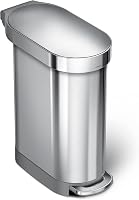
simplehuman 45 L Slim Hands-Free Can: for narrow floor spaces
Choose this slim step can if you have a narrow floor spot and want pedal access. Its rectangular body measures 21.5 in long, 10.2 in wide, and 24.4 in high, so account for its depth as well as its width.
The liner rim grips and hides the bag without an inner bucket, and the can uses Code N custom-fit liners. simplehuman's Lid Shox mechanism controls the lid's slow close.
Skip it if the only available space sits under a low counter or leaves no room for your foot. The closed height doesn't tell you how much overhead space the open lid needs.
Leave enough access to raise the liner rim during bag changes. For other shapes, compare our slim kitchen trash cans, and use the kitchen trash can size guide to balance capacity against floor space.
How do you keep the trash can from blocking the kitchen?
Keep it outside door swings and the busiest walking route, including when it's open. A hidden pull-out can block an aisle just as easily as a floor can while someone uses it.
Don't wedge a step can so tightly beside a wall that you must twist your foot to reach the pedal. For a pull-out, leave a standing position beside or in front of the extended frame.
Avoid placing a can where drips from carrying a full bag must cross rugs or stored items. Easy bag removal matters as much as easy access during cooking.
Beside the refrigerator can work, but keep the appliance's required ventilation space clear. Check the manual and open doors fully enough to use the drawers before accepting that gap as a bin location.
How should you set up and care for the chosen spot?
Set up the can so bags, lids, and moving parts stay clear of nearby surfaces. Small fit problems become daily annoyances once a bag is full.
For cabinet organizers, follow the mounting instructions and confirm that screws won't damage plumbing or other fittings. Check landlord rules before drilling in a rented kitchen.
Keep the liner tucked away from hinges and sliding tracks. Stop filling the bag before it bulges against the cabinet opening or becomes difficult to lift.
Wipe up spills beneath the can and inside the cabinet, then dry the area. Keep crumbs out of sliding hardware and follow the maker's care instructions before applying any lubricant.
On a floor can, clean around the pedal and underneath the base as well as the visible body. Move it periodically so damp debris doesn't remain trapped against the floor.
A cabinet door can hide waste, but it doesn't remove odors. Take food waste out promptly and follow our guide to keeping a kitchen trash can from smelling.
Which kitchen trash can location should you choose?
Choose where to put your trash can in the kitchen by matching access to your daily routine. The right setup lets you discard scraps, open nearby doors, and change bags without moving anything first.
- Choose the simplehuman slim step can when you have a narrow floor space and want access without using your hands.
- Choose the simplehuman under-counter pull-out when you want a complete hidden setup and can spare a clear cabinet.
- Choose the LYNK single organizer when you already have a bin that fits and have confirmed the frame dimensions.
- Choose the LYNK double organizer when you have room for separate trash and recycling containers behind one door.
If none fits, reconsider the location before settling for a can that's awkward to use. Our guide to choosing a kitchen trash can helps you narrow down capacity, shape, and opening style.
FAQ
The best location keeps daily disposal and bag changes easy. These answers cover common placement questions near the sink and refrigerator.
Where is the best place to put a kitchen trash can?
Put it beside your main prep counter or sink, outside the walking path. Choose the spot where you discard food scraps most often, then check access with the dishwasher and nearby doors open.
A cabinet pull-out works when hiding the can matters and the cabinet has clear space.
Should a kitchen trash can go under the sink?
Yes, if the cabinet has room for the container, its opening or sliding motion, and bag removal. Pipes, a disposal, hinges, and cleaning supplies can reduce the usable space.
Measure around those obstacles rather than using the cabinet's outside dimensions, and keep access to plumbing clear.
How far should a trash can be from the kitchen sink?
Keep it close enough to scrape plates without carrying wet scraps across the room, but leave space to stand and load the dishwasher. There is no single distance that suits every kitchen.
Check the full cleanup routine, including opening the can and lifting out a full bag.
Can you keep a trash can beside the refrigerator?
Yes, if the can leaves the refrigerator doors, drawers, and required ventilation space clear. Follow the appliance manual for ventilation clearance rather than treating every side gap as storage.
Open the refrigerator fully and make sure the can still allows comfortable access and a clear walking path.
Frequently asked questions
Where is the best place to put a kitchen trash can?
Put it beside your main prep counter or sink, outside the walking path. Choose the spot where you discard food scraps most often, then check access with the dishwasher and nearby doors open.
A cabinet pull-out works when hiding the can matters and the cabinet has clear space.
Should a kitchen trash can go under the sink?
Yes, if the cabinet has room for the container, its opening or sliding motion, and bag removal. Pipes, a disposal, hinges, and cleaning supplies can reduce the usable space.
Measure around those obstacles rather than using the cabinet's outside dimensions, and keep access to plumbing clear.
How far should a trash can be from the kitchen sink?
Keep it close enough to scrape plates without carrying wet scraps across the room, but leave space to stand and load the dishwasher. There is no single distance that suits every kitchen.
Check the full cleanup routine, including opening the can and lifting out a full bag.
Can you keep a trash can beside the refrigerator?
Yes, if the can leaves the refrigerator doors, drawers, and required ventilation space clear. Follow the appliance manual for ventilation clearance rather than treating every side gap as storage.
Open the refrigerator fully and make sure the can still allows comfortable access and a clear walking path.