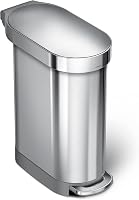
Kitchen Trash Can Sizes: Gallons and Liters Explained
For kitchen trash can sizes, start by comparing 10 to 13 gallons, or about 38 to 49 liters. Choose based on how quickly your trash fills, how often you empty it, and the space needed for the can, open lid, and bag removal.
On this page (9 sections)
- What are common kitchen trash can sizes in gallons and liters?
- How do you choose capacity for your household?
- Who should choose a 13-gallon kitchen trash can?
- When does a 10-gallon trash can make sense?
- When is a larger kitchen trash can worth the space?
- How do you measure for a kitchen trash can?
- How should you fit liners and care for the can?
- Does recycling change the trash can size you need?
- Which kitchen trash can size should you pick?
Kitchen trash can sizes around 10 to 13 gallons are a useful starting range for everyday kitchen waste. Choose the smallest capacity that handles your usual trash between emptying trips without crowding the kitchen.
Household size helps, but your habits matter more. A household that separates food scraps and recycling may need less trash space than one that puts most kitchen waste into a single bag.
What are common kitchen trash can sizes in gallons and liters?
A common kitchen size is 13 gallons, or about 49 liters. Smaller options suit light waste or frequent emptying, while larger bins give bulky trash more room.
| Capacity in US gallons | Approximate capacity in liters | A useful starting point for |
|---|---|---|
| 5 gal | 19 L | Light waste or a compact secondary bin |
| 8 gal | 30 L | Small households with frequent emptying |
| 10 gal | 38 L | Moderate waste with regular bag changes |
| 13 gal | 49 L | Everyday kitchen waste with some bulky items |
| 21 gal | 79 L | High waste volume or bulky packaging |
These are starting points, not fixed household limits. Takeout containers can fill a bin quickly, while wet food scraps may need removing long before the bag fills.
How do you convert kitchen trash can sizes?
Multiply US gallons by 3.785 to get liters, or divide liters by 3.785 to get US gallons. Round the result when comparing bins rather than treating a small difference as extra usable space.
Brands often round capacity in product names. A 50-liter bin is close to the familiar 13-gallon size, but that doesn't mean every 13-gallon bag will fit its rim and depth.
How do you choose capacity for your household?
Choose capacity by how much trash builds up between your usual emptying trips. Watch your current bin for several days, including a busy cooking day, before deciding to go larger or smaller.
Notice why you change the bag. If it's full, more capacity may help; if it smells while half empty, extra space won't solve the main problem.
Use these clues to narrow the choice:
- You empty a partly filled bag daily: compare smaller bins.
- The lid won't close before your usual trash trip: consider more capacity.
- Large containers fill the bin: flatten suitable packaging or separate recycling first.
- Full bags are hard to carry: choose a manageable load rather than the largest bin.
Allow some spare room for meal prep and guests, but don't size the whole kitchen around rare events. A separate bag during a major cleanout can be easier than keeping an oversized can all year.
For opening styles and other buying decisions, read how to choose a kitchen trash can.
Who should choose a 13-gallon kitchen trash can?
Choose a 13-gallon can when you want a middle-size option for daily cooking waste and packaging. Skip this size if your trash goes out mostly empty or your available nook is too narrow.
The Songmics 13 Gal Stainless Step Can suits buyers who want pedal opening and a removable bucket. Its soft-close lid avoids a loud clang, and you can open the lid fully by hand to keep it open during longer cleanup tasks.
Its outside dimensions are 17 inches long, 14.6 inches wide, and 24.9 inches high. Check the full rectangle on your floor, especially beside a cabinet where the wider body could block a door.
The inner bucket has a rear hole for tucking in excess bag material. Use it to secure loose edges, but start with a bag deep enough to reach the bottom so the rim doesn't carry the whole load.
Skip this model if its footprint crowds your walkway or you prefer a sensor lid. Compare other shapes and opening styles in our guide to the best kitchen trash cans.
When does a 10-gallon trash can make sense?
Choose a 10-gallon can if you empty trash often, separate much of your waste, or want to limit the size of each load. Skip it if bulky waste already forces several bag changes during your normal cooking routine.
The simplehuman 38 L Rectangular Step Can suits a wall-side spot because its internal hinge lets the lid open with the body flush against the wall. You still need clear space above it.
It measures 15.8 inches long, 12.5 inches wide, and 25.7 inches high. Despite its lower capacity, it's taller than the Songmics, which shows why gallons alone can't settle a fit question.
The removable inner bucket helps with rinsing and liner changes, while the stay-open lid helps during meal prep. It uses simplehuman Code J custom-fit liners, so include liner fit in your choice.
Skip this can if your main goal is fewer trash trips from a high-volume kitchen. Its wall-friendly hinge solves a placement problem, but it doesn't add room inside.
When is a larger kitchen trash can worth the space?
Choose a larger can when waste volume regularly exceeds a middle-size bin and full bags remain manageable. Skip extra capacity if food waste needs taking out before your current bin fills.
The EKO Mirage X 21 Gal Sensor Can suits households with bulky waste and a preference for touchless opening. Its press-to-open option holds the lid open for 20 minutes, which can help during a longer kitchen cleanup.
The body measures 18.5 inches long, 11 inches wide, and 27.1 inches high. Its narrow width may suit some gaps, but the longer footprint and lid height still need checking.
Try lifting a typical full bag before deciding you want much more capacity. Wet scraps and dense waste can make a large bag awkward well before it reaches the top.
Skip this model if you want pedal operation or need a can beneath a low shelf. Don't choose the largest option just to reduce bag changes if that means leaving food waste indoors longer.
How do you measure for a kitchen trash can?
Measure the body space, lid space, and removal path before buying. A can that fits while closed can still be difficult to use.
- Measure the available height, width, and depth.
- Mark the proposed footprint with removable tape.
- Open nearby drawers, cabinet doors, and appliances.
- Check clearance for the fully open lid.
- Confirm you can lift out a bag or bucket, or pull the can forward first.
- Leave standing room to reach the opening or use the pedal.
For a sensor can, avoid a position where normal movement keeps passing close to the sensor. For a pedal can, leave enough room in front to step comfortably without twisting around a cabinet.
An internal hinge can remove the need for rear clearance, but it doesn't remove the need for overhead room. Under a counter, plan how you'll move the can out if the lid or bag can't clear the underside.
See where to put a trash can in a kitchen for placement ideas. If width is the main limit, compare slim kitchen trash cans by outside dimensions.
How should you fit liners and care for the can?
Fit the liner so it reaches the bottom and stays secure around the rim. Capacity labels alone don't guarantee bag fit because rim size, depth, and shape vary.
Before filling a new can, open a bag fully and check that it sits down inside without stretching tightly across the top. Leave enough material above the rim to secure it and tie the bag later.
Avoid packing trash into the lid's closing path or forcing sharp packaging against the bag. Overfilling makes removal harder and can leave waste caught around the rim.
Wipe spills promptly, clean the rim and underside of the lid, and dry a washed bucket before adding a fresh liner. Keep moisture away from sensor controls and follow the care instructions for the finish.
Take food waste out when needed rather than waiting for a full bag. For persistent odors, follow our guide to keeping a kitchen trash can from smelling.
Does recycling change the trash can size you need?
Separating recycling can reduce the space needed for ordinary trash, but the recycling container needs its own capacity. Choose each side based on what actually fills it.
A dual-compartment can splits its total capacity between sections. A large combined number can hide a trash section that's too small for your usual bag changes.
Check each compartment's capacity and opening size, especially for bottles or wide containers. Our guide to dual-compartment trash and recycling cans can help you compare that layout.
Which kitchen trash can size should you pick?
Choose kitchen trash can sizes by your normal emptying routine, usable space, and lifting comfort. Use these decision rules to finish your choice:
- Choose simplehuman for frequent emptying and a wall-side spot where rear lid clearance matters.
- Choose Songmics for a middle-size pedal can with a removable bucket and room for its wider footprint.
- Choose EKO for bulky waste and sensor opening, provided you can handle larger bags.
Before ordering, confirm the outside dimensions and removal path, then choose liners that fit the shape. Use our kitchen trash can guide to compare opening styles once you've settled on capacity.
Frequently asked questions
How many liters is a 13 gallon kitchen trash can?
A 13 gallon kitchen trash can holds about 49 liters, using the US gallon conversion of 3.785 liters per gallon. Brands may round this size to 50 liters.
Compare outside dimensions too, because similar capacities can come in different shapes and need different amounts of floor space.
Is a 10 gallon trash can big enough for a kitchen?
A 10 gallon trash can can suit a smaller household or a kitchen where trash goes out often. Separate recycling and food scraps can also reduce the capacity you need.
If your current bag fills before your usual emptying time, consider more room or a more frequent disposal routine.
What size trash can fits under a kitchen counter?
The right size depends on the opening's height, width, and depth, plus room to operate the lid. Measure the full space rather than choosing by gallons.
You also need a clear path to lift out a full bag or bucket, or enough room to slide the can out first.
Are gallons and liters the same for trash can capacity?
Gallons and liters both measure volume, but they use different units. One US gallon equals about 3.785 liters, so multiply US gallons by that number to compare capacities.
Check which gallon unit is being used, since an Imperial gallon is larger and gives a different conversion.