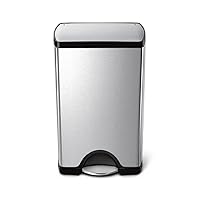
Best Kitchen Trash Cans: Sensor, Step and Dual Picks
The simplehuman 45 L Rectangular Step Can is our top pick for the best kitchen trash can thanks to its pedal, secure liner rim and built-in bag storage. Choose the 58 L Step Recycler for sorting, EKO for everyday sensor use, or iTouchless for a manual lid lock.
On this page (13 sections)
- Which is the best kitchen trash can for your routine?
- Why these kitchen trash cans made the shortlist
- Which kitchen trash cans stand out?
- How much capacity will your kitchen actually use?
- Is a step or sensor lid easier to live with?
- Should trash and recycling share one can?
- How do you check fit before ordering?
- Where should a kitchen trash can go?
- Which bag system will make changes easier?
- What should you do when the new can arrives?
- How do you keep a kitchen trash can fresh?
- Which buying mistakes are easiest to avoid?
- Which kitchen trash can should you choose?
The simplehuman 45 L Rectangular Step Can is our top pick for the best kitchen trash can because it makes daily disposal and bag changes straightforward. Its pedal, liner rim and internal bag storage suit a busy kitchen that needs one main trash bin.
Choose the dual compartment simplehuman if recycling belongs beside your trash. The EKO and iTouchless models suit people who prefer a sensor lid, with different reasons to choose each.
The right choice starts with where the can will go and what you throw away. A larger bin will not solve a cramped walkway, and a sensor will not help if its lid hits the counter.
For a broader checklist of capacity, lid and odor needs, see how to choose a kitchen trash can.
Which is the best kitchen trash can for your routine?
The simplehuman 45 L step can is the best starting point for most kitchens here. Choose another model when sorting, pedal access or a manual sensor lock matters more than a single-bin layout.
| Pick | Best fit | Opening | Capacity |
|---|---|---|---|
| simplehuman 45 L Rectangular Step Can | Busy kitchens with one main trash bin | Step-on | 45 L |
| simplehuman 58 L Step Recycler | Households that sort recycling beside trash | Step-on | 58 L total |
| EKO Mirage-T 13 Gal Sensor Can | Everyday sensor use with standard bags | Motion sensor | 50 L |
| iTouchless 13 Gal Pet Lock Sensor Can | Homes that need a manually disabled sensor lid | Motion sensor | 13 gal |
Use this table to narrow the opening style and layout first. Then check the full measurements and bag system before choosing between models that look similar.
A total capacity is especially easy to misread on a recycler. Its space serves 2 waste streams, so it should not be compared with a single bin as though all of it holds trash.
For detailed gallon and liter comparisons, use our kitchen trash can sizes guide.
Why these kitchen trash cans made the shortlist
These picks cover single-bin disposal, recycling separation and sensor opening without making every kitchen use the same setup. We compared their opening systems, liner arrangements, dimensions and features that change daily chores.
The top pick puts bag handling and pedal use first. The recycler earns its place by keeping sorting together, while the sensor models offer alternatives for people who would rather trigger a lid with movement.
The scores rank these choices within this guide, but your layout can outweigh the order. A lower-ranked sensor model is the better purchase if a pedal would be hard for you to reach.
We also gave weight to maintenance needs. A convenient opening system still has to leave you with a bag you can secure, remove and carry without making the next chore harder.
Which kitchen trash cans stand out?
Choose the 45 L simplehuman for one main bin, the recycler for sorting, EKO for a sensor-first routine, or iTouchless for its manual lock. Each fits a different household need, so the sections below explain who should buy it and who should skip it.
simplehuman 45 L Rectangular Step Can
The simplehuman 45 L Rectangular Step Can suits busy kitchens that want foot operation and quick bag changes. It is the strongest all-around choice here when recycling already has a separate home.
Score: 8.8/10. Best for busy family kitchens.
Its stainless steel body measures 15.9 in long, 13.3 in wide and 25.8 in high. The liner rim closes over the bag edge, keeping it held in place and hidden from view.
The refill pocket matters most when several people change bags. Keeping replacements at the can removes the search through a cabinet and makes it easier to leave a fresh liner ready for the next person.
It is designed around Code M liners, and the pocket stores and dispenses a pack from inside. Choose this setup if you like keeping the bag fit and refill routine consistent.
simplehuman says the wide steel pedal is engineered for 150,000 steps. Its Lid Shox mechanism controls closing, and a stay-open lid helps with longer jobs such as clearing food packaging after meal prep.
Buy it if you use the kitchen often, have a separate recycling solution and want a pedal-operated can with tidy bag edges. The slow close also suits an open kitchen where a slamming lid would be distracting.
Skip it if reaching a foot pedal is awkward or you need recycling in the same station. The liner pocket also adds little value if you prefer storing all replacement bags elsewhere.
At setup, practice a liner change before the first bag is full. Seat the bag evenly beneath the rim, then check that the lid closes without catching loose plastic.
simplehuman 58 L Step Recycler
The simplehuman 58 L Step Recycler suits households that separate trash and recycling at the same spot. Buy it for the sorting layout rather than as a larger replacement for a single trash bin.
Score: 8.3/10. Best for household recycling.
It measures 14.2 in long, 22 in wide and 25.8 in high. The body is brushed stainless steel, while the soft-close lid is plastic.
The trash side uses a liner rim and Code H custom-fit liners. A built-in pocket stores replacements, while the recycling side has a handled bucket that you can carry to your collection bin.
That bucket makes sense when you empty recycling loose into a larger container. It also avoids automatically using a bag on a waste stream that your local collection program may require loose.
The main buying question is how your waste divides between the 2 sides. If bulky cartons and containers dominate, a combined station may still require frequent recycling trips.
Buy it if everyone in the household will use the same sorting point and you have room for the full width. It can make correct disposal easier by putting both choices within reach.
Skip it if you need maximum room for trash alone or already have a convenient recycling drawer. Separate bins can also suit households whose trash and recycling volumes differ sharply.
For a closer look at liner fit, read which simplehuman liner code fits your trash can.
Place a simple recycling reminder nearby if household members sort differently. Follow your local collection rules rather than assuming every plastic container, wrapper or food-stained package belongs in the bucket.
EKO Mirage-T 13 Gal Sensor Can
The EKO Mirage-T 13 Gal Sensor Can is the better fit here for everyday sensor opening with familiar kitchen bags. Choose it when you want motion-triggered access and do not need a built-in pet lock.
Score: 8.2/10. Best for pedal-free meal prep.
It uses a removable inner rim to hold and conceal the bag edge. A touch switch keeps the lid open for longer tasks, which is useful when clearing a cutting board or unpacking several food items.
The can is 24.6 in high and needs 36 in of height with the lid open. That open measurement matters more than the closed height if you plan to place it beneath an overhang.
EKO gives differing footprint measurements for this model, so confirm the exact width and depth before ordering for a tight gap. Leave room to lift the lid assembly for bag changes as well.
It requires AA alkaline batteries, which are not included, and EKO advises against rechargeable batteries. EKO says battery life can reach 8 months, though your replacement schedule will depend on use.
Buy it if a foot pedal would be inconvenient or you prefer opening the lid with a hand movement. Its standard-bag compatibility also suits households that already keep 13-gallon bags on hand.
Skip it if you want no battery upkeep, have low overhead clearance or need a manual pet lock. A busy passage beside the sensor is also a reason to reconsider the location.
After fitting a bag and batteries, check the lid from your normal working position. Make sure you can approach, open it and drop waste without leaning over the lid's path.
iTouchless 13 Gal Pet Lock Sensor Can
The iTouchless 13 Gal Pet Lock Sensor Can suits homes that want sensor access plus a manual lock. The lock is its main reason to choose it over the EKO.
Score: 8.1/10. Best for homes with pets.
It measures 12.7 in long, 10.8 in wide and 27.3 in high. A retainer ring secures standard 13-gallon kitchen drawstring bags and keeps the edges out of sight.
The side-mounted Pet Lock and Child Lock switch disables lid opening when engaged. That adds a deliberate step to access, so it is useful only if household members remember to use it.
The first AbsorbX carbon odor filter is included. iTouchless says it helps reduce odors, but it does not remove the need to empty food waste or clean residue beneath the lid.
The can runs on 4 D-size batteries, which are not included. It is also compatible with the official iTouchless AC power adapter, so check which power setup suits the intended location.
Buy it if you want to disable the sensor lid between uses, especially when a curious pet shares the kitchen. The included filter is another useful feature if odor upkeep is a priority.
Skip it if you expect a lock to work without anyone engaging it. Choose a pedal model if you would rather avoid managing both power and a lock during daily use.
A locked lid does not address every way a determined animal might reach waste. Keep dangerous scraps out of reach and use our guide to dog-proofing a kitchen trash can to plan the whole setup.
For odor upkeep, see how to keep a kitchen trash can from smelling.
How much capacity will your kitchen actually use?
Choose enough room for your usual emptying schedule, with a full bag you can comfortably lift. Household size helps, but what you cook and what you recycle often matters more.
A household that cooks from fresh ingredients may produce frequent wet scraps. Another may fill the bin mainly with light packaging, even if the same number of people live there.
Watch your current trash for several days before choosing a larger can. Note whether you empty it because it is full, smells unpleasant or has become too heavy.
If odor forces early bag changes, extra capacity will not solve the problem. You may get more value from removing food scraps sooner and keeping packaging out of the trash where local recycling allows.
If the bag fills with bulky packaging, break down suitable empty boxes before disposal. Avoid pressing down on waste by hand, especially when broken glass or sharp packaging could be hidden inside.
The best kitchen trash can size matches your bag-change routine
Use your current bag changes as the starting point. If your present size works except after an occasional gathering, buying a much larger everyday bin may leave normal loads sitting longer.
For someone who carries trash down stairs or along a long hallway, a manageable load matters more than maximum volume. A bag can become heavy before the can looks full.
Dual compartment capacity needs a separate check. Picture the trash and recycling sides filling independently rather than treating the total as one large opening.
Our guide to kitchen trash can sizes explains the units and helps you compare capacities without overlooking the outside shape.
Is a step or sensor lid easier to live with?
Choose step operation for simplicity and sensor operation when reaching a pedal is inconvenient. Both opening styles let you keep your hands off the lid during food prep.
A pedal works well when you can stand directly in front of the can. Before choosing one, make sure the planned spot leaves room for your foot and does not force you into an awkward stance.
A sensor can suit a location approached from the side or a user who finds foot operation difficult. Its usefulness still depends on being able to reach the sensing area comfortably.
For either type, think about the item you are carrying. A wide cutting board, a messy plate or a large package may need a longer opening than a quick toss of a wrapper.
A stay-open feature helps during repeated disposal, but close the lid once the task is done. Leaving food waste exposed gives odors and curious pets easier access.
Sensor placement deserves particular care near walkways. Movement from passing people or nearby activity can cause unwanted openings, so check normal kitchen traffic before settling on the spot.
For a closer comparison of access and upkeep, read touchless versus step trash cans.
Should trash and recycling share one can?
Choose a dual compartment station when both waste streams belong in the same place. Separate bins work better when their collection routes or space needs are very different.
Sorting beside the prep area reduces the temptation to drop everything into one bag. It also gives household members a clear choice at the moment they discard something.
The trade-off is fixed space for each stream. A kitchen that produces large amounts of cardboard may outgrow a recycling compartment even when the trash side has plenty of room left.
Check where the recycling bucket goes after you lift it out. A clear route to the outdoor or building collection bin matters as much as the station's appearance.
A single dual can will not cover every local sorting rule. You may still need separate places for food scraps, returnable containers or items your collection service handles differently.
See our best dual compartment trash and recycling cans for more options and trade-offs.
How do you check fit before ordering?
Measure the floor space, the open lid and the bag-removal path. A can that fits neatly while closed can still be awkward to empty.
Mark the planned footprint on the floor with removable tape. Open nearby cabinet doors and drawers, then walk through the kitchen as you would while cooking.
Check 3 kinds of clearance:
- Front access: room to approach the opening and use a pedal where fitted.
- Overhead space: room for the lid to open fully without striking a counter or shelf.
- Service space: room to remove the lid, lift a full bag or take out a recycling bucket.
Do not assume you will be happy pulling the can out every time you change a bag. That extra move becomes more awkward when the can is full or the surrounding floor is busy.
Also check the route from its spot to the exit. A broad station may fit beside a cabinet yet make carrying a loaded bucket through the kitchen inconvenient.
Avoid choosing by closed height alone. Open-lid height and the room your hands need above the bag opening are separate checks.
Where should a kitchen trash can go?
Place the can near your main disposal work without blocking movement. The best location is usually one you can reach during prep and cleanup while leaving doors and walkways clear.
Think through the route from food storage to prep surface to sink. A bin at the edge of that working area can be easier to share than one directly where another person needs to stand.
Avoid putting a sensor can where every passing hand or swinging object moves close to its sensor. A spot that looks tidy can be inconvenient if normal activity keeps opening the lid.
Keep the can accessible for cleaning around and behind it. Tight placement that traps spills can make a small mess harder to notice and remove.
For placement ideas and common kitchen layouts, read where to put a trash can in a kitchen.
Which bag system will make changes easier?
Choose a bag that stays secure and lifts out without strain. Capacity labels are a starting point, but the bag's opening, length and shape affect how it fits the can.
With a rim or retainer ring, spread the bag edge evenly before securing it. Loose folds can bunch near the hinge or interfere with the lid.
Let the bottom of the bag reach into the can rather than stretching it tightly across the opening. Waste should settle inside the liner without pulling the top edge free.
Do not solve a slipping bag by stuffing more plastic under a closing part. Refit it and check the required size before loading more waste.
Custom-fit systems suit readers who want a matched bag and rim arrangement. Standard-bag systems suit those who prefer choosing among familiar kitchen drawstring bags.
Whichever system you choose, replace the bag before waste rises above the rim. An overfilled bag is harder to tie, more likely to brush the lid and less comfortable to carry.
Sharp scraps and liquids need separate care. Wrap sharp edges safely and avoid pouring liquids into a bag that may leak when lifted.
What should you do when the new can arrives?
Set up the liner, opening system and placement before adding waste. A few simple checks make fit problems easier to spot while the can is empty.
Start with this sequence:
- Remove packaging and check that moving parts have a clear path.
- Fit the correct liner and secure its edge evenly.
- Add the required batteries to a sensor model, following the marked direction.
- Open and close the lid from your normal working position.
- Rehearse removing the bag or recycling bucket.
- Show other household members any lock, stay-open control or sorting arrangement.
For a step can, press the pedal while standing where you will normally use it. If you have to twist or move another object first, adjust the location.
For a sensor can, check operation with nearby cabinet doors open and closed. Also walk past it normally to see whether the chosen spot causes unwanted openings.
Keep replacement bags in a consistent place and spare batteries nearby if needed. If a sensor lid later stops responding, our guide to why a touchless trash can won't open covers common causes.
How do you keep a kitchen trash can fresh?
Remove wet waste promptly and clean spills before they dry. Filters and closed lids can help with odors, but neither removes the residue that causes lingering smells.
Check beneath the bag when you empty the can. A small leak can leave moisture in the bottom even when the bag looks intact.
Wipe the rim and underside of the lid when food splashes there. These areas are easy to miss because you mostly see the outside during normal use.
Use mild cleaning products suited to the finish and follow the brand's care directions. Avoid abrasive pads that can scratch stainless steel or damage a protective surface.
On sensor models, keep liquid away from the controls and battery compartment. Wipe electronic lid areas carefully rather than soaking the whole assembly.
Dry the interior before adding a fresh bag. A liner placed over trapped moisture can hide the problem until the next change.
Fingerprint-resistant finishes still need cleaning. For a simple upkeep routine, follow how to clean a stainless steel trash can.
Which buying mistakes are easiest to avoid?
Avoid buying for one appealing feature while overlooking daily chores. The most useful can fits your kitchen, opens comfortably and makes full bags easy to remove.
Choosing the largest capacity: More room is helpful only if you fill it at a sensible pace. Food scraps that sit too long can make a larger bin less pleasant to use.
Treating total recycler volume as trash volume: Separate compartments serve different jobs. Decide whether the split fits your household before comparing the total with a single can.
Forgetting the open lid: A closed can may tuck under an overhang while the lid cannot rise. Include the opening path in your measurements.
Expecting a sensor to replace good placement: Motion-triggered access does not fix a blocked walkway. Leave space for the person using it and the lid itself.
Relying on a lock without a routine: A manual lock helps only when someone engages it. Make its use part of leaving the kitchen unattended.
Ignoring the refill system: The bag size and battery type become repeat chores. Choose supplies you are willing to keep available rather than focusing only on the first setup.
Which kitchen trash can should you choose?
The best kitchen trash can is the one that solves your main daily problem and fits the whole task, from disposal to carrying the bag out. Use these decision rules after checking your space.
- Choose the simplehuman 45 L Rectangular Step Can if you want one main trash bin, easy bag access and pedal operation.
- Choose the simplehuman 58 L Step Recycler if trash and recycling need one shared station and its width fits your kitchen.
- Choose the EKO Mirage-T 13 Gal Sensor Can if pedal-free access is the priority and you are happy to manage batteries.
- Choose the iTouchless 13 Gal Pet Lock Sensor Can if you want sensor use with a manual lock you will engage consistently.
Before ordering, rehearse the full movement: approach the can, open it, lift a bag and walk it out. That check will reveal more about fit than the capacity number alone.
If motion-triggered access is your deciding feature, use our best touchless trash cans guide to narrow the options around your preferred setup.
Frequently asked questions
What is the best type of kitchen trash can?
A step can is the best starting point for most kitchens because it opens by foot and needs no batteries. Choose a sensor can if reaching a pedal is awkward, or a dual compartment model if you sort recycling beside your trash.
Check placement and bag fit before choosing.
What size kitchen trash can should I get?
Choose a size that holds your usual waste between planned bag changes without letting food scraps sit too long. A 12- to 13-gallon can is a useful starting point, but household size alone is not enough.
Cooking habits, recycling and the weight you can comfortably lift also matter.
Are sensor trash cans better than step cans?
Sensor cans are better for people who prefer motion-triggered opening or find a foot pedal awkward to use. Step cans are better for those who want operation without batteries.
Both can keep your hands off the lid, so choose based on access, placement and the upkeep you will accept.
Do dual compartment kitchen cans save space?
A dual compartment can combine trash and recycling in one station, but it does not always occupy less floor space than separate bins. Its stated capacity covers both sides together.
Compare the full footprint and your waste balance, especially if bulky recycling fills much faster than the trash.
What should I check before buying a kitchen trash can?
Check the footprint, open-lid height, bag fit and space needed to remove a full liner. Then choose an opening style you can use comfortably and decide whether recycling belongs beside the trash.
For sensor models, also check the required batteries and whether the planned location may cause unwanted openings.