How to Dog-Proof a Kitchen Trash Can
To dog-proof a kitchen trash can, lock the lid and prevent access to the whole bin. Choose a compatible strap for your current can or a pet-lock replacement, then use a closed cabinet or room if your dog can tip it.
On this page (8 sections)
- How do you dog-proof a kitchen trash can?
- Which dog-proof kitchen trash can setup should you buy?
- What should you measure before choosing a can or strap?
- How should you fit a trash can lock?
- Where should you put the trash can?
- How do you keep the setup clean and reliable?
- Which mistakes leave the trash within reach?
- Which dog-proof kitchen trash can option should you choose?
To dog-proof a kitchen trash can, secure the lid and stop your dog from tipping or reaching the bin. A lock helps with lid lifting, while a closed cabinet or room adds protection around the whole can.
Choose the fix that matches your dog's behavior. Replacing a bin makes little sense if a compatible strap solves the problem, but a lid lock alone won't solve repeated tipping.
How do you dog-proof a kitchen trash can?
Use a lid barrier, stable placement, and regular food waste removal together. Each handles a different route into the trash.
Watch how your dog reaches the contents before choosing a fix. Keep the can inaccessible while you work out the setup.
| How your dog gets in | Start with | Check next |
|---|---|---|
| Lifts the lid with its nose | A compatible lid lock or strap | Whether the lid still lifts at another edge |
| Opens a pedal or sensor lid | A separate locking feature | Whether everyone engages it after use |
| Tips or drags the bin | A closed cabinet or room | Whether your dog can open that barrier |
| Pulls at an exposed bag | Tuck the liner fully inside | Whether the lid closes without trapping it |
Don't leave the dog with access to the can just to see what happens. Check the closure and placement yourself with the dog kept away.
Which dog-proof kitchen trash can setup should you buy?
Choose a replacement can for built-in locking, or an adhesive strap when your current bin already works well. Neither choice removes the need to check stability and access.
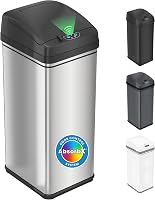
The 2 iTouchless cans below share the main features that matter here: sensor opening, a pet lid lock, and an odor filter. Choose between them by fit and daily-use features rather than assuming one offers stronger protection.
Which pet-lock kitchen trash can suits a smaller floor space?
Choose the iTouchless 13 Gal PetGuard Sensor Can if you want a replacement with a slightly smaller footprint than the other iTouchless option here. Its body measures 12.7 x 10.8 x 27.3 in, so measure your available space before ordering.
This model suits a household that wants motion opening during kitchen work and a separate lock for pet access. It accepts common kitchen bags, and its retainer ring keeps the liner in place.
Power comes from 4 D batteries, which are not included, or an optional AC adapter sold separately. If you choose the adapter, plan a route that keeps the cord away from chewing and foot traffic.
Skip it if your current can only needs a latch, or if your main problem is tipping. Its non-skid base does not replace a location your dog cannot access.
Who should choose the other iTouchless sensor can?
Choose the iTouchless 13 Gal Dog-Proof Sensor Can if quiet lid movement matters and you have room for its 13 x 11 x 28 in body. iTouchless describes its soft-close mechanism as designed to reduce opening and closing noise.
The bag retainer ring holds the liner at the top, while air vents help release suction during bag removal. Those features suit a busy kitchen where bag changes are frequent.
Its bucket-free design means there's no removable inner bucket to carry to a sink. Keep bags intact and remove leaks promptly rather than allowing liquid to collect inside.
Skip it if you prefer a removable wash bucket or want to avoid powered lid operation. For the broader choice between opening styles, see touchless vs step trash cans.
When does the LynxLink strap make more sense?
Choose the LynxLink Trash Can Lock Strap when you want to keep existing bins and secure 2 lids. The pack contains 2 gray straps with a dual-button mechanism and manual-lift release.
This option suits a kitchen bin plus a bathroom pail, provided both have suitable attachment areas. Flexible pads allow fitting around curved surfaces, but the exact lid shape still determines whether the strap can bridge the opening.
LynxLink describes the release as usable with 1 hand. Before choosing it, consider whether everyone who empties the bin can manage that release and fasten it again.
Skip it if the pads cannot make full contact or your dog regularly drags the can. A strap connects the lid to the body; it does not attach the bin to the floor.
When is the Wappa Baby strap the better fit?
Choose the Wappa Baby Trash Can Lock Strap if you only need to secure 1 compatible bin. It comes as a single pack with a dual-lock mechanism and flexible adhesive pads.
This is a practical starting point when you like your current can's size, bag fit, and position. The pads accommodate curved surfaces, so a rounded bin does not automatically require replacement.
Plan where both pads will sit before attaching them. Avoid a position that blocks the hinge, traps the liner, or pulls a pad away from the surface as the lid moves.
Skip it if your lid is damaged or won't close fully. Repair or replace that bin first, since adding a strap will not correct a poor lid fit.
What should you measure before choosing a can or strap?
Measure the closed footprint, open-lid space, and bag-removal path before buying a replacement. A can that fits under a counter may still lack room to open or lift out a full bag.
Use kitchen trash can sizes to compare capacity with the space you have. Choose a size you can empty regularly rather than a large bin that leaves food waste sitting for longer.
For a strap, check the attachment areas on both the lid and body. Seams, raised trim, heavy texture, and greasy surfaces can prevent full adhesive contact.
Also think through meal cleanup. If the release is awkward for someone in your household, the lid may get left unsecured.
How should you fit a trash can lock?
Fit the lock with the can empty, clean, and dry, following its instructions. Position an adhesive strap before peeling its pads so you can check the lid's full movement.
- Remove dirt and grease from the attachment areas using a method suitable for the can's finish.
- Let the surfaces dry completely.
- Check that the strap reaches without pulling the lid out of position.
- Apply the pads and allow any required bonding time.
- Open, close, and refasten the lock with your dog kept away.
For a sensor can, learn the pet-lock controls before putting it into daily use. Check that the lid is fully seated and the bag isn't caught beneath it.
Teach everyone the same closing routine. A lock left open after scraping a plate provides no barrier for the next visit.
Where should you put the trash can?
Put the can behind a closed door or inside a cabinet your dog cannot open if lid access or tipping remains a problem. A corner limits approach from some directions but does not contain a movable bin.
Choose a location with room to use the lock and remove bags. Crowding the can into a tight gap can make cleanup awkward and encourage people to leave it pulled out.
Keep counters and nearby surfaces free of scraps that could draw your dog toward the bin. Don't store a full trash bag beside the secured can.
See where to put a trash can in a kitchen for placement ideas that account for walkways and cleanup areas.
How do you keep the setup clean and reliable?
Remove food waste and spills promptly, then check the closure during routine cleaning. Odor control helps with smells, but it does not keep a lid fastened.
Keep cooking scraps in a closed container out of reach until you can put them in secured trash. Don't leave food-covered packaging on the floor during bag changes.
Wipe around the lid rim and check straps for peeling edges. If a pad starts lifting, move the bin out of reach while you address the attachment according to its instructions.
Keep moisture away from sensor controls and powered lid parts during cleaning. Our guide to cleaning a stainless steel trash can covers care for the body and finish.
Follow the filter replacement instructions for either iTouchless can. For the rest of your odor routine, see how to keep a kitchen trash can from smelling.
Which mistakes leave the trash within reach?
The biggest mistakes are leaving the lock disengaged, overfilling the can, and treating a lid lock as an anchor. Each can defeat an otherwise sensible setup.
Don't pack waste above the rim. A bulging bag can hold the lid open or stop the lock from fastening fully.
Tuck loose bag edges inside rather than leaving them hanging where a dog can pull them. Check the lid after every bag change.
Avoid propping a secured door open for convenience. If that happens often, choose a more usable location so the barrier stays in place.
Which dog-proof kitchen trash can option should you choose?
Choose LynxLink for 2 compatible bins or Wappa Baby for 1 when your existing can closes properly and stays in place. Check the adhesive fit before committing to either strap.
Choose the smaller-footprint iTouchless PetGuard model when floor space matters. Choose the other iTouchless model when its soft-close feature suits your household and its body fits your kitchen.
If your dog tips bins or gets past lid barriers, prioritize a closed cabinet or room. Build your dog-proof kitchen trash can setup around the route your dog uses to reach waste.
For replacement choices, compare the best dog-proof kitchen trash cans. If you're also changing capacity or opening style, start with the best kitchen trash cans.
Frequently asked questions
What is the best way to dog-proof a kitchen trash can?
Secure the lid and stop your dog from moving or tipping the can. A compatible strap can help with lid lifting, while a closed cabinet or room adds a barrier around the whole bin.
Remove food waste often and fasten the lock again after every use.
Do trash can locks work on every kitchen bin?
No, trash can locks need a compatible lid and attachment area. Adhesive straps need clean surfaces where both pads can make full contact without blocking the hinge or lid seal.
Check the fitting instructions before attaching one, and choose another setup if the pads cannot sit flat.
Are sensor trash cans dog-proof?
A motion sensor alone does not make a trash can dog-proof. Movement near the sensor may open the lid, so choose a separate pet-lock feature and engage it as directed.
Check stability too, because a lid lock does not anchor the can or keep a dog from tipping it.
Where should I put a kitchen trash can so my dog can't reach it?
Put the can inside a cabinet your dog cannot open or behind a closed room door. Leave enough room for the lid to open and for bag changes.
Choose a spot people can use easily, since a door left open removes the extra barrier you added.