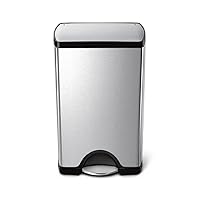
6 Best Stainless Steel Kitchen Trash Cans (October 2026)
The best stainless steel kitchen trash cans include the simplehuman 50 L Rectangular Step Can for busy home cooks, the Glad 13 Gal Stainless Step Can for limited bag storage, and the EKO Madison Brushed Step Can for dedicated recycling stations.
On this page (8 sections)
- How we chose stainless steel kitchen trash cans
- Compare the best stainless steel trash cans
- The best stainless steel trash cans for different kitchens
- What should you check before choosing a stainless steel can?
- How should you set up a new stainless steel trash can?
- How do you keep stainless steel clean and odors under control?
- Which common buying mistakes should you avoid?
- Which best stainless steel trash can fits your kitchen?
The simplehuman 50 L Rectangular Step Can is the best stainless steel trash can for most kitchens because its internal hinge, bucket park and wheels help with placement and cleanup. Glad is the better fit when spare-bag storage matters most.
All 6 picks are pedal-operated cans with similar capacities. The useful differences are how they fit beside cabinets, hold a bag and let you remove a full load.
For a broader look at opening styles, start with our best kitchen trash cans guide. If you're choosing between capacities, the kitchen trash can sizes guide explains gallons and liters.
Our picks at a glance
-
1

-
2

-
3

- 4
 Best for straightforward kitchen cleanupCheck it
- 5
 Best for matte kitchen finishesCheck it
- 6
 Check it
Songmics 13 Gal Stainless Step Can
Best for hiding bag edges
How we chose stainless steel kitchen trash cans
We compared placement, bag handling and cleanup features to match each can with a kitchen routine. We gave more weight to useful differences than to small changes in capacity.
A quiet lid is useful across this group, so it isn't a strong reason to choose one over another. An internal hinge, spare-bag compartment or accessible bucket handles can make a clearer difference in daily use.
We also separated finish preference from function. Brushed and matte steel offer different looks, but neither removes the need to wipe spills or clean the inside.
These picks suit buyers who want a freestanding pedal can. If pressing a pedal is awkward for you, or your only available spot blocks foot access, choose the opening style before choosing the material.
Compare the best stainless steel trash cans
Choose by usable floor space and bag-change access first, then compare the features that solve your daily annoyances. The capacities here are close enough that a small volume difference shouldn't outweigh an awkward fit.
| Product | Best for | Capacity | Dimensions | Opening | Our score |
|---|---|---|---|---|---|
| simplehuman 50 L Rectangular Step Can | busy home cooks | 50 L / 13.0 gal | 19.8 x 12.8 x 25.7 in | Step-on pedal | 9.0 |
| Glad 13 Gal Stainless Step Can | limited bag storage | 13 gal | 16 x 16 x 23 in | Step-on pedal | 8.0 |
| EKO Madison Brushed Step Can | dedicated recycling stations | 13.2 gal / 50 L | 16.9 x 14.3 x 25.4 in | Step-on pedal | 7.9 |
| Amazon Basics 13 Gal Step Can | straightforward kitchen cleanup | 13.2 gal / 50 L | 16.73 x 14.65 x 25.87 in | Step-on pedal | 7.7 |
| EKO Madison Matte Step Can | matte kitchen finishes | 13.2 gal / 50 L | 16.9 x 14.3 x 25.4 in | Step-on pedal | 7.6 |
| Songmics 13 Gal Stainless Step Can | hiding bag edges | 13 gal / 50 L | 17 x 14.6 x 24.9 in | Step-on pedal | 7.5 |
Closed dimensions show whether the body fits, but they don't describe the whole working space. You also need room to stand at the pedal, open the lid and lift a full bag without hitting a counter.
A lower closed height doesn't guarantee that a can works under a shelf. Measure the open lid separately, and plan where you'll move the can when it's time to empty it.
The best stainless steel trash cans for different kitchens
Choose simplehuman for frequent kitchen cleanup, Glad for nearby spare bags or an EKO Madison for a separate recycling station. Amazon Basics and Songmics suit buyers whose main priorities are routine bucket cleaning and liner handling.
simplehuman 50 L Rectangular Step Can: Best for busy home cooks
- 50 L capacity
- Internal hinge
- Removable inner bucket
- Fingerprint-proof finish
- Built-in wheels
The internal hinge suits wall placement, while wheels and a bucket park position help with moving and emptying the can. Choose it for frequent kitchen cleanup.
Pros
- Internal hinge allows placement against a wall
- Bucket park supports easier bag changes
- Rubber base pads help keep it steady
Cons
- Long footprint needs measuring
- One compartment cannot separate trash and recycling
The simplehuman suits a kitchen where the can gets used throughout meal prep and cleanup. Its internal hinge allows placement directly against a wall, which helps keep a freestanding bin out of the walkway.
Bag changes are its strongest distinction. Lift the inner bucket slightly, tilt it toward you and rest it in the bucket park position rather than holding the bucket up while fitting a fresh liner.
The wheels help when moving the can out to clean behind it. Rubber pads on the base help it stay steady, while the lid can remain open during longer chores.
simplehuman says its steel pedal is engineered for more than 150,000 steps. Treat that as a durability claim, rather than a reason to overlook whether the pedal is comfortable in your chosen spot.
Buy it for wall placement and easier bag changes. Skip it if the long footprint crowds a cabinet opening or if you need separate waste compartments.
Code Q is simplehuman's custom-fit liner size for this can. If you prefer other bags, check their dimensions and rim fit before buying a large supply.
Glad 13 Gal Stainless Step Can: Best for limited bag storage
- 13 gal capacity
- Rear bag compartment
- Bag rings
- Soft-close lid
- Fingerprint-resistant finish
A rear compartment keeps spare bags beside the job, and bag rings hold excess liner material out of sight. Leave side access for dispensing bags.
Pros
- Spare bags dispense from the sides
- Bag rings secure and hide liner slack
- Shortest closed can in this group
Cons
- Square footprint needs depth beside cabinets
- ABS plastic lid rather than stainless steel
The Glad is the strongest choice here if spare bags otherwise live across the kitchen or take up scarce cabinet space. Its rear bag compartment keeps replacements beside the bin, with dispensing access from the sides.
That access should guide placement. Leave a clear route to the bag openings instead of wedging the can tightly between cabinets and making its main convenience hard to use.
Bag rings hold the liner and tuck away slack. Take a moment to seat the bag evenly before replacing the rings, especially if excess plastic bunches near the lid.
Glad says its Clorox odor protection covers the lid and frame for the life of the can. Keep that claim separate from waste care: food residue in a bag or on the rim still needs prompt attention.
Choose Glad for a self-contained bag-change station. Skip it if you want a stainless steel lid, since this model pairs a steel body with an ABS lid.
Its square footprint also deserves attention beside shallow cabinets. Check the front edge against your walking route, rather than measuring only the space along the wall.
EKO Madison Brushed Step Can: Best for dedicated recycling stations
- 13.2 gal capacity
- Brushed stainless finish
- Stay-open lid lock
- Raised bucket with handles
- Fingerprint-resistant finish
A single compartment suits one waste stream, such as kitchen trash or mixed recyclables accepted locally. Bucket handles give you a grip for removal.
Pros
- Useful as a separate recycling container
- Lid locks open for longer chores
- Raised inner bucket has handles
Cons
- Does not sort different waste streams
- Needs overhead room for opening and bucket removal
The brushed EKO Madison suits a dedicated recycling station beside your main trash can. Its single compartment provides one space for the materials your local recycling program accepts together.
It can also serve as the main kitchen waste bin. The reason to choose it for recycling is the separate station you can create, rather than any built-in sorting system.
The raised inner bucket has handles, giving you a grip when removing it. A lid lock keeps the opening available while you clear a counter or sort a batch of containers.
EKO says the steel pedal is built for more than 200,000 uses. That claim doesn't establish a longer service life than another can, since pedal counts don't describe every part of the mechanism.
Choose it for one clearly assigned waste stream and a brushed finish. Skip it if you expect one purchase to separate trash from recycling.
Before putting a liner in a recycling bin, check local collection rules. For sorting within one unit, compare dual compartment trash and recycling cans.
Amazon Basics 13 Gal Step Can: Best for straightforward kitchen cleanup
- 13.2 gal capacity
- Stay-open lid
- Removable inner bucket
- Carry handle
- Smudge-resistant exterior
A pedal, removable plastic bucket and stay-open lid cover the main kitchen tasks. The carry handle helps when repositioning the empty can.
Pros
- Removable bucket for cleaning
- Stay-open lid for longer tasks
- Carry handle for repositioning
Cons
- Tallest closed can in this group
- No separate compartment for sorting recycling
The Amazon Basics suits someone who wants a straightforward cleanup routine without making spare-bag storage or a special finish the main feature. Its removable plastic bucket gives you a separate piece to wash when a liner leaks.
The lid stays open for longer tasks, so you can replace the bag without repeatedly pressing the pedal. A carry handle provides a grip for repositioning the empty can.
This model makes sense if your spare bags already have a convenient home. You can focus on whether the bucket is comfortable to remove and whether the can fits beside your work area.
It's the tallest closed can in this group. That matters beneath a shelf, although open-lid clearance and room to lift a bag remain separate checks.
Choose it for a simple pedal-and-bucket setup. Skip it if your main need is bag storage at the bin or a dedicated way to divide waste.
A removable bucket makes spills easier to reach, but it won't prevent them. If smells are the reason you're replacing your current can, use our guide to keeping a kitchen trash can from smelling alongside your choice.
EKO Madison Matte Step Can: Best for matte kitchen finishes
- 13.2 gal capacity
- Matte stainless finish
- Stay-open lid lock
- Raised inner bucket with handles
- Fingerprint-resistant finish
Choose the matte Madison when its finish fits your kitchen better than brushed steel. Its capacity and closed dimensions match the brushed version.
Pros
- Matte finish offers a different look
- Lid locks open for chores
- Bucket handles help with removal
Cons
- Needs 36.6 in of height with lid open
- Does not add capacity over the brushed version
The matte EKO Madison is the choice for a kitchen where matte stainless fits the surrounding finishes better than brushed steel. It has the same capacity and closed dimensions as the brushed Madison, so appearance is the clearest reason to choose between them.
Don't expect the matte version to solve a space problem that rules out the brushed model. Both need a suitable floor position and access above the body.
This version needs 36.6 in of height with the lid open. A shelf above that height can still interfere with lifting out the bucket, so check the bag-change route as well.
The lid locks open, and the raised bucket has handles for removal. Those features suit a main waste station or a separate recycling container.
Choose it when the matte finish is worth prioritizing. Skip it if your shelf blocks the lid or if you need two compartments within one footprint.
Treat the finish as a care surface rather than something to polish automatically. Follow its cleaning directions before applying a stainless steel cleaner, since finish treatments can have different requirements.
Songmics 13 Gal Stainless Step Can: Best for hiding bag edges
- 13 gal capacity
- Soft-close lid
- Removable inner bucket
- Bag hole secures liner
- Manual stay-open position
The inner bucket's bag hole lets you tuck away excess liner material. Choose it when a neat rim matters and you don't mind arranging the bag during changes.
Pros
- Bag hole holds excess liner material
- Inner bucket lifts out for cleaning
- Rear handle helps with moving
Cons
- Tucking excess liner adds a bag-change step
- Stay-open use requires fully opening the lid by hand
The Songmics suits buyers who dislike bag edges hanging over the rim. A hole at the back of the inner bucket lets you tuck in excess liner material and secure the bag.
That feature is useful if you're willing to arrange the liner during each change. Spread the bag around the rim first, then gather the slack rather than pulling so much material through that the bag becomes tight.
For longer chores, fully opening the lid by hand lets it stay open. Routine pedal use and the manual stay-open position serve different tasks, so choose based on how you normally clear food scraps.
The plastic inner bucket lifts out for cleaning, and a rear handle helps with moving the can. Songmics says the tightly closing lid helps contain unpleasant odors.
Choose it for a tidy rim and a removable bucket. Skip it if you want to avoid the extra liner-tucking step or need a stay-open position without lifting the lid by hand.
Keep the rim free of trapped plastic so the lid can settle properly. For finish care, use our stainless steel trash can cleaning guide.
What should you check before choosing a stainless steel can?
Check placement, waste volume and emptying access before comparing finishes. A bin that looks right but blocks a drawer or makes full bags hard to remove will be awkward every day.
How much room does the best stainless steel trash can need?
The right can needs room for its body, moving lid and your feet. Mark its footprint on the floor with removable tape, then open nearby drawers, cabinet doors and the dishwasher.
Stand where you'd normally scrape a plate. Make sure you can reach the pedal without turning sideways, leaning over the counter or stepping into a busy doorway.
The simplehuman measures 19.8 x 12.8 x 25.7 in, while the Glad measures 16 x 16 x 23 in. Their different shapes show why similar capacity doesn't mean similar placement.
Check bag removal by imagining a full liner rising above the rim. If a counter blocks that path, decide whether you have space to pull the can forward each time.
For help choosing the spot itself, see where to put the trash can in a kitchen.
Is a 13-gallon can the right size for your waste?
Choose capacity around how much waste you produce between emptying trips, rather than household size alone. Cooking from fresh ingredients can produce bulky scraps, while separating recycling changes what reaches the main bin.
A smaller household can still benefit from a roomy opening and bucket. The mistake is waiting for the bag to fill when wet food waste needs to go out sooner.
If you regularly carry out a half-empty bag because it smells, more capacity won't solve the problem. Focus on keeping food scraps contained and choosing a can that's easy to clean.
At the other extreme, a tightly packed bag can be difficult to lift and more likely to tear around sharp packaging. Empty before waste needs pushing down to make space.
Which lid and opening style suits your routine?
A step can suits you if foot-operated opening feels comfortable and the pedal stays accessible. Every pick here uses that approach, avoiding the need for batteries to open the lid.
A stay-open position is useful for peeling vegetables or clearing several plates. Close it when the task ends, especially if children or pets can reach the contents.
For motion-triggered alternatives, compare our best touchless trash cans. Think about your reach and kitchen traffic before deciding that automatic opening would be more convenient.
Should you prioritize steel, the finish or the inner bucket?
Prioritize the parts you touch and clean most often. A stainless steel exterior affects appearance, while the bucket, rim and underside of the lid handle much of the mess.
A removable bucket is useful when a bag leaks because you can carry it to a suitable washing area. Check whether lifting and carrying that bucket fits your strength and cleaning space.
A resistant finish can reduce visible smudges, but it doesn't mean the whole can is stainless steel or needs no care. The Glad's ABS lid is one example of why material details matter.
Our stainless steel trash can cleaning guide covers upkeep. For help deciding whether steel suits your routine at all, compare stainless steel vs plastic trash cans.
How should you set up a new stainless steel trash can?
Set it up with an empty liner and a clear opening path before filling it with waste. This lets you catch a poor fit or blocked pedal while adjustments are easy.
- Remove packaging and check the care and lid instructions before operating any stay-open lock.
- Place the can on a level floor and confirm that its base sits evenly.
- Open nearby doors and drawers, then press the pedal from your normal standing position.
- Fit a liner around the rim, smoothing folds away from the hinge and lid.
- Use the can's bag rings, bucket opening or other retention feature as directed.
- Close the lid and confirm that no plastic is caught underneath it.
Don't buy a large supply of bags based only on a gallon label. Bag width, length and top shape affect whether the liner reaches the bucket bottom and folds securely over its rim.
A bag suspended above the bottom carries waste through tension at the top. Refit it or choose a more suitable size instead of relying on a tight rim to support the load.
Check the first few bag changes before committing to the location. You may find that a small shift gives you a much straighter lifting path without changing how the can looks beside a cabinet.
How do you keep stainless steel clean and odors under control?
Clean spills, the rim and the bucket, rather than focusing only on the shiny exterior. A clean front panel won't help if food residue remains beneath the lid.
For routine exterior care, use a soft cloth and the method approved for the finish. Remove grit before wiping, follow the grain where visible and dry the surface afterward.
Avoid abrasive pads and harsh cleaners unless the care instructions allow them. Don't assume that a cleaner suitable for an uncoated steel appliance is also suitable for a fingerprint-resistant finish.
Wash a removable bucket separately and let it dry before fitting a fresh bag. Wipe around the rim, lid underside and bucket contact points, where small drips can collect unnoticed.
Keep water away from hinges and closing mechanisms unless the instructions specifically allow washing those areas. A removable bucket gives you a way to handle wet cleanup without soaking the whole can.
For odor control, take out food waste before it sits too long and deal with leaks promptly. A lid or odor-related treatment supports that routine; it doesn't replace removing the source.
If pets have access to the kitchen, don't assume a metal body or pedal makes a can secure. Our guide to dog-proofing a kitchen trash can covers placement and access choices.
Which common buying mistakes should you avoid?
Avoid choosing by capacity or finish alone. The most useful checks involve how you open, empty and clean the can in its actual location.
- Measuring only the closed body: Allow for the lid and the upward path of a full bag.
- Blocking the pedal: A can beside an island can fit physically while leaving no comfortable place for your foot.
- Ignoring bag storage access: Glad's compartment helps only if you can reach its side openings.
- Overfilling the liner: Dense or sharp waste can make removal harder even when room remains near the lid.
- Confusing one compartment with sorting: A recycling-ready can still needs a separate place for household trash.
- Choosing finish before fit: A preferred surface won't compensate for a drawer that hits the bin.
Also distinguish quiet closing from a stay-open position. The first controls the lid's return; the second holds it out of your way during a task.
If your current can's lid stops closing properly, check for trapped liner material and waste near the rim before deciding the whole can needs replacing. Don't force a lid or pedal against an obstruction.
Which best stainless steel trash can fits your kitchen?
Choose the simplehuman if frequent meal prep makes wall placement, supported bag changes and easier movement worth prioritizing. Pick Glad when keeping spare bags at the bin solves your main storage problem.
Choose the brushed EKO Madison for a separate recycling station, or the matte Madison when that finish better suits your kitchen. Neither separates waste within the can, so plan a second container if you need another waste stream.
Pick Amazon Basics for a straightforward removable-bucket setup. Choose Songmics if hidden liner edges matter enough to spend a little time tucking the bag during changes.
The best stainless steel trash can is the one you can open comfortably and empty without rearranging the kitchen. Measure that working space first, then use the kitchen trash can sizes guide if you're still deciding whether this capacity suits your routine.
Our top 3 picks at a glance
-
1
-
2
-
3
Frequently asked questions
What size stainless steel trash can works for most kitchens?
About 13 gallons or 50 liters is a useful starting point for a main kitchen bin. Choose around your waste volume and emptying routine, since a large can can leave food scraps sitting too long.
Our kitchen trash can size guide explains capacity and how it relates to placement.
Does stainless steel show fingerprints?
Stainless steel can show fingerprints, including on surfaces with resistant finishes. Fingerprint-proof, fingerprint-resistant and smudge-resistant finishes reduce the need for touch-ups, but they still need care.
Use a soft cloth and follow the finish instructions.
Our stainless steel trash can cleaning guide covers routine cleaning without harsh scrubbing.
Should I choose a step can or a sensor can?
Choose a step can if you can comfortably reach and press a pedal and want to avoid batteries. Choose a sensor can if motion-triggered opening better suits your reach or kitchen layout.
Placement still matters with either design.
Compare alternatives in our best touchless trash cans roundup.
Can a stainless steel trash can help control kitchen odors?
A closing lid can help contain odors, but the steel body doesn't stop food waste from smelling. Glad says its odor protection covers the lid and frame; Songmics says its tightly closing lid helps contain smells.
Empty wet waste promptly and follow our guide to keeping a kitchen trash can from smelling.