simplehuman 45 Liter Trash Can Review: Worth It? (October 2026)
The simplehuman 45 liter trash can in rectangular steel is the best fit here for everyday pedal use and easy bag changes. Choose the slim version for a narrow gap, plastic for a dent-resistant body, or sensor opening if using a pedal is difficult.
On this page (8 sections)
- What does the simplehuman 45 liter trash can offer?
- Is 45 L the right capacity for your household?
- Which simplehuman 45 L version should you choose?
- How much working space should you leave around the can?
- How do you set up the liner system correctly?
- How should you clean the can and control odors?
- Which everyday mistakes should you avoid?
- Which simplehuman 45 liter trash can should you buy?
The simplehuman 45 liter trash can in rectangular steel is the strongest choice here for daily kitchen use, especially if you cook often and change bags frequently. Its liner pocket and stay-open lid help with those tasks, while the pedal keeps your hands off the lid.
Choose by location and opening style first. The slim, plastic and sensor alternatives solve different problems, so the highest-scoring model won't suit every kitchen.
What does the simplehuman 45 liter trash can offer?
The rectangular steel model offers foot-pedal opening, hidden bag edges and refills stored inside the can. Its main appeal is making disposal and bag changes easier in a kitchen where the bin gets used throughout the day.
simplehuman 45 L Rectangular Step Can: Best for busy home cooks

- 45 L capacity
- Brushed stainless steel
- Liner rim and liner pocket
- Pedal engineered for 150,000 steps
- Lid Shox slow-close lid
Choose this rectangular steel step can for frequent food prep and bag changes. Its wide pedal, stay-open lid and nearby liner supply suit a busy cooking area.
Pros
- Rim grips the liner and hides its edge
- Pocket keeps spare liners within reach
- Wide steel pedal leaves hands free
- Lid can stay open for longer chores
Cons
- Wider than the slim model
- Pedal needs clear floor access
The stainless steel liner rim lifts for a bag change, then closes over the fresh liner to grip and hide its edge. The built-in pocket holds a 20-pack of matching bags and dispenses them one at a time.
That arrangement suits a cooking area where spare bags would otherwise live across the room or behind other supplies. Keep the pocket stocked when you put away a refill pack, rather than waiting until the last bag is gone.
The wide steel pedal opens the lid, and Lid Shox controls its slow, quiet close. The lid can also stay open for longer chores, so you don't need to keep pressing the pedal while clearing a meal.
simplehuman engineers the pedal for 150,000 steps and backs this can with a 10-year warranty. The step figure is a design claim, not a promise of how long the whole can will last in your home.
Skip this model if its footprint or pedal position is awkward. Liner storage won't make up for a can that blocks a drawer or forces you to reach around a cabinet every time you use it.
Is 45 L the right capacity for your household?
A 45 L can suits a kitchen that needs a full-size trash container, but your waste habits matter more than household size alone. Recycling, food-scrap separation and bulky packaging all change how quickly it fills.
If your current bag fills with dry packaging before food waste causes odor, this size may reduce frequent bag changes. Flatten clean, recyclable boxes and separate them where local rules allow, rather than using kitchen trash space for everything.
If food scraps smell before the bag is full, a larger can won't solve the problem. You may need more frequent emptying or a separate food-scrap routine instead.
These models are commonly described as 12 gallon cans. Our kitchen trash can size guide explains volume differences if you're moving from a smaller bin.
A useful check is to watch your current trash routine for a few days. Note whether you empty because the bag is full, too heavy or starting to smell, then choose capacity around that reason.
Which simplehuman 45 L version should you choose?
Choose rectangular steel for frequent kitchen use, slim for a narrow gap, plastic for resistance to everyday marks, or sensor opening to avoid a pedal. All 4 hold the same volume, but their footprints and liner codes differ.
Dimensions below are length x width x height. Measure the actual location rather than judging fit from a product photo.
| Model | Dimensions | Matching liner | Main reason to choose |
|---|---|---|---|
| Rectangular Step Can | 15.9 x 13.3 x 25.8 in | Code M | Convenient bag changes and pedal use |
| Slim Hands-Free Can | 21.5 x 10.2 x 24.4 in | Code N | Narrow placement space |
| Plastic Step Can | 13.3 x 19 x 26 in | Code K | Plastic body with liner storage |
| Semi-Round Sensor Can | 12.8 x 15.4 x 25.2 in | Code J | Opening without a foot pedal |
When is the simplehuman 45 liter slim trash can better?
The slim model is better when available width rules out the rectangular steel can. Its longer footprint makes it a good candidate for a narrow wall or cabinet gap, provided it doesn't project into your walking path.
simplehuman 45 L Slim Hands-Free Can: Best for narrow kitchen gaps
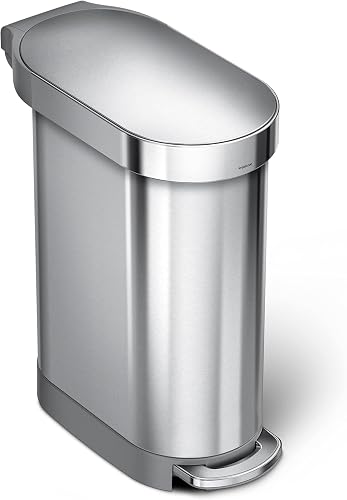
- 45 L capacity
- Slim rectangular shape
- Brushed stainless steel
- Liner rim
- Lid Shox slow-close lid
The slim shape suits a narrow wall or cabinet gap while keeping full kitchen capacity. Check its longer footprint before placing it beside a walkway.
Pros
- Narrow shape fits tight locations
- Rim keeps the bag edge hidden
- Controlled lid close
Cons
- Longer footprint than the rectangular steel model
- A tight gap can restrict pedal access
A narrow fit still needs working space. You must be able to stand at the pedal, open the lid and lift a full bag without dragging it against cabinet hardware.
This version keeps the liner rim and controlled lid close, and simplehuman backs it with a 10-year warranty. Choose it for the shape rather than expecting a smaller-capacity can.
Skip it if the extra length creates a walkway obstacle. Compare the best slim kitchen trash cans if your gap has both width and depth limits.
Who should choose the plastic step can?
Choose the plastic model if avoiding dents and visible fingerprints matters more than matching steel appliances. It retains a stainless steel liner rim, built-in liner pocket and slow-close lid.
simplehuman 45 L Plastic Step Can: Best for high-traffic family kitchens

- 45 L capacity
- Gray plastic body
- Stainless steel liner rim
- Built-in liner pocket
- Wide weighted base
The plastic model suits households that prioritize resistance to dents and fingerprints over a steel body. It retains the liner pocket and controlled lid close.
Pros
- simplehuman calls the body dent-proof and fingerprint-proof
- Pocket stores spare liners
- Wide weighted base supports stability
Cons
- Wider than the rectangular steel model
- Shorter warranty than the steel step models
simplehuman describes the gray body as dent-proof and fingerprint-proof. That makes it worth considering near a busy family drop zone, though surface resistance doesn't remove the need to wipe away spills.
Its wide, weighted base is designed for stability during pedal use. Place it on a level floor and leave the pedal clear so household members can approach it directly.
simplehuman backs this version with a 5-year warranty, shorter than the steel step models. Skip it if you need a narrow footprint or strongly prefer the appearance of brushed steel.
When does the sensor model make more sense?
Choose the sensor model when using a foot pedal is difficult or inconvenient. A hand wave opens the lid, and simplehuman describes the design as ADA-compliant.
simplehuman 45 L Semi-Round Sensor Can: Best for avoiding foot pedals

- 45 L capacity
- Wave-to-open lid
- Adaptive motion sensor
- Liner rim and liner pocket
Choose wave-to-open access when standing on a pedal is inconvenient or difficult. Confirm power requirements and comfortable sensor reach before ordering.
Pros
- Opens without a foot pedal
- Rim hides the liner edge
- Built-in pocket stores refills
- simplehuman describes the design as ADA-compliant
Cons
- Needs power for automatic opening
- Sensor placement needs more planning than a pedal
Both step and sensor models let you dispose of scraps without touching the lid. The sensor version's distinct benefit is removing the need to operate a pedal, which can matter when planning an accessible kitchen.
simplehuman says its adaptive sensor adjusts to the surrounding environment to reduce unwanted openings and closures. Its planetary gear system is designed for smooth lid movement.
Plan a clear approach to the sensor and confirm the power requirements before ordering. Skip it if you prefer a can that opens without powered controls, or if the intended spot makes a hand wave awkward.
For alternatives with this opening style, compare our best motion sensor trash cans.
How much working space should you leave around the can?
Leave space for your feet, the moving lid and a full bag, beyond the can's closed dimensions. A bin that fits on the floor can still be awkward under a counter or beside an appliance.
Mark the footprint with removable tape before ordering. Open nearby drawers, cabinet doors and the dishwasher to check whether the proposed location interrupts normal kitchen use.
Check overhead clearance separately because the closed height doesn't show the space needed by an open lid. Don't assume a can will work under a counter just because its body fits.
For step models, stand where you'd press the pedal while holding a cutting board. For the sensor model, check whether you can comfortably reach the opening from the position where you'll normally use it.
Leave room to lift a bag straight upward before carrying it away. A tight recess can turn a routine change into a spill risk if you have to pull a heavy bag sideways.
Our guide to where to put a kitchen trash can can help you balance disposal access with drawer clearance. If the opening method is still undecided, read touchless vs. step trash cans.
How do you set up the liner system correctly?
Start with the liner code for your exact model, then seat the bag evenly before closing the rim. Capacity alone doesn't identify the right shape or fit.
Lift the liner rim, insert the fresh bag and spread it into the corners without stretching it hard across the opening. Smooth the upper edge before lowering the rim so folds don't bunch beneath it.
Check that the bag reaches into the can rather than hanging mainly from its top edge. Poor seating can strain the liner as waste builds up or pull excess material into the lid area.
The rectangular steel, plastic and sensor models have internal liner pockets. Load matching refills according to the can's instructions, keeping loose packaging clear of the lid and rim.
A common mistake is buying refills from memory because several simplehuman cans hold the same volume. Keep the code with your shopping notes, or use our simplehuman liner code guide before reordering.
Stop filling when you can still gather and close the bag comfortably. Pressing rigid packaging downward to gain space can puncture a liner and make removal harder.
How should you clean the can and control odors?
Remove food waste before it smells and clean leaks promptly. A closed lid and odor accessory support that routine, but neither removes spoiled scraps or residue from inside the can.
Let hot food cool before disposal, and keep free liquids out of the bag where practical. Wrap wet scraps or contain them within your normal waste routine to reduce leaks and drips during removal.
At each bag change, look around the rim and base for spilled food or moisture. Wipe residue with a soft cloth and mild cleaner suitable for the surface, then dry the area before fitting another liner.
For brushed steel, wipe with the grain and avoid abrasive pads. simplehuman says the rectangular model's coating resists fingerprints, but fingerprints and food marks still call for regular care.
The rectangular steel model includes an Odorsorb pod starter pack, and simplehuman says the pod controls trash odors for 45 days. Keep emptying based on what is inside the bag rather than waiting for that period to pass.
Use our kitchen trash can odor guide for recurring smells. The stainless steel trash can cleaning guide covers finish care in more detail.
Which everyday mistakes should you avoid?
Avoid overfilling, blocking the lid and treating the can as pet-proof. Those habits matter more to daily use than small differences in appearance.
Don't force the lid down over waste that rises above the rim. Remove the bag and check for trapped liner material before applying pressure to a lid that won't close normally.
Keep the opening area clear of towels, cabinet handles and nearby stored items. On a sensor model, keep the sensor clean and follow its placement instructions before assuming an opening problem needs a replacement part.
Don't treat a closing lid as a lock for a determined pet. Keep tempting food waste out of reach and choose the location around your animal's behavior.
Also avoid placing heavy waste in a bag simply because space remains. Emptying sooner is easier than wrestling a dense load out of a close-fitting can.
Which simplehuman 45 liter trash can should you buy?
Buy the rectangular steel model if you cook often, can reach the pedal easily and want refills stored at the can. Its stay-open lid is especially useful when several scraps or packages need to go in during one chore.
Choose the slim model only after confirming its longer footprint clears your walkway. Pick plastic when resistance to dents and fingerprints is a priority, or sensor opening when avoiding a pedal makes disposal easier.
If separating recycling is the bigger issue, compare the simplehuman 58 L dual-compartment step recycler before settling on a single-bin model. For a wider comparison of opening styles and layouts, see our best kitchen trash cans.
The simplehuman 45 liter trash can earns its place when its shape and bag-change system match your routine. If you're still weighing those conveniences against a simpler bin, read whether simplehuman trash cans are worth it.
Frequently asked questions
Is the simplehuman 45 liter trash can worth it?
The rectangular steel model is worth choosing if frequent bag changes, a hidden liner edge and pedal access matter in your kitchen. Its built-in liner pocket and stay-open lid support those routines.
Choose a simpler can if you mainly need a container and would rarely use those conveniences.
How many gallons is 45 liters?
45 liters is about 11.9 US gallons, commonly rounded to 12 gallons for these cans. That describes internal volume, not the floor space required.
Compare each model's dimensions with your intended location, then allow extra space for lid movement, pedal use and lifting out a full bag.
Which liners fit the simplehuman 45 L cans?
Use Code M for the Rectangular Step Can, Code N for the Slim Hands-Free Can, Code K for the Plastic Step Can and Code J for the Semi-Round Sensor Can. Match the code to the exact model because equal capacity does not mean the cans share the same bag shape.
Should I choose the step or sensor version?
Choose a step model when you can reach the pedal comfortably and want opening without a powered sensor. Choose the sensor model when foot operation is difficult or inconvenient.
Both approaches leave your hands free of the lid, so decide around access and placement rather than that benefit alone.


