6 Best Step Trash Cans (October 2026)
The best step trash cans include the simplehuman 50 L Rectangular Step Can for busy kitchen chores, the simplehuman 45 L Rectangular Step Can for frequent bag changes, and the simplehuman 45 L Slim Hands-Free Can for narrow kitchen gaps.
On this page (8 sections)
- Which is the best step trash can for your kitchen?
- How do you choose the right capacity and footprint?
- Should you choose a removable bucket or a liner rim?
- Which pedal, lid and storage features deserve priority?
- How do you fit a liner and set up the can?
- How do you keep a step trash can clean and fresh?
- Which common buying and use mistakes should you avoid?
- Which step trash can should you choose?
The simplehuman 50 L Rectangular Step Can is the best step trash can for most kitchens because it combines a removable bucket, stay-open lid and wheels. Choose the slim model for a narrow gap, or the 45 L rectangular model if quick bag changes matter most.
A foot pedal keeps your hands free while you scrape plates or handle food waste. The useful differences are how each can fits your floor, holds its bag and opens during longer chores.
See our broader best kitchen trash cans guide for sensor, step and dual-compartment choices. If space is already tight, start with kitchen trash can sizes before choosing by capacity.
Our picks at a glance
-
1
 Best for busy kitchen chores
simplehuman 50 L Rectangular Step Can
9.0/10 our score
See it on Amazon -
2
 Best for frequent bag changes
simplehuman 45 L Rectangular Step Can
8.8/10 our score
See it on Amazon -
3
- 4
 Check it
simplehuman 38 L Rectangular Step Can
Best for lower-waste kitchens - 5
 Check it
Glad 13 Gal Stainless Step Can
Best for shared kitchen routines - 6
 Check it
simplehuman 45 L Plastic Step Can
Best for high-traffic family kitchens
Which is the best step trash can for your kitchen?
The 50 L simplehuman is the strongest all-round choice, but a narrower body or different liner system can matter more than extra capacity. Start with the kitchen task you want to make easier: fitting the can, changing bags or washing the interior.
We compared dimensions, capacity, pedal and lid features, and bag handling. The recommendations below explain where each design helps and which buyers should choose another option.
| Product | Best for | Capacity | Shape | Liner fit | Our score |
|---|---|---|---|---|---|
| simplehuman 50 L Rectangular Step Can | busy kitchen chores | 50 L | Rectangular | simplehuman Code Q | 9.0 |
| simplehuman 45 L Rectangular Step Can | frequent bag changes | 45 L | Rectangular | simplehuman Code M | 8.8 |
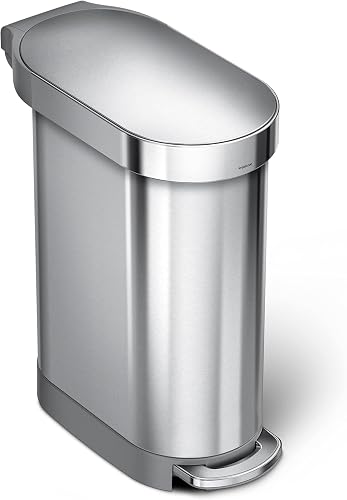
| simplehuman 45 L Slim Hands-Free Can | narrow kitchen gaps | 45 L | simplehuman Code N | 8.5 | |
| simplehuman 38 L Rectangular Step Can | lower-waste kitchens | 38 L | Rectangular | simplehuman Code J | 8.4 |
| Glad 13 Gal Stainless Step Can | shared kitchen routines | 13 gal | 8.0 | ||
| simplehuman 45 L Plastic Step Can | high-traffic family kitchens | 45 L | simplehuman Code K | 7.9 |
simplehuman 50 L Rectangular Step Can: Best for busy kitchen chores
- 50 L capacity
- Stay-open lid
- Removable inner bucket
- Built-in wheels
Choose this can for longer kitchen cleanups and a bucket you can remove to wash. Wheels help when you need to move it to clean the floor.
Pros
- Stay-open lid for longer chores
- Removable bucket catches drips
- Wheels help with moving
Cons
- Needs room for its longer footprint
- Weighs 16.5 lb empty
Choose this model if meal prep and cleanup happen around the can. The stay-open lid lets you scrape several dishes or clear a cutting board without holding the pedal down throughout the task.
Its removable bucket catches drips and gives you a separate container to wash after a leak. The bucket-park position supports the bucket partway out, which helps when fitting a fresh liner.
The internal hinge allows placement against a wall, while wheels help you move the can for floor cleaning. Rubber pads on the base help keep it steady during pedal use.
At 19.8 x 12.8 x 25.7 in, it needs a clear floor area plus room above the lid. It takes Code Q liners, and simplehuman rates the steel pedal for more than 150,000 steps.
Skip it if your trash leaves daily in partly filled bags or you have little room to move around it. The smaller bucket model below makes more sense when you want easy washing without the largest capacity here.
simplehuman 45 L Rectangular Step Can: Best for frequent bag changes
- 45 L capacity
- Flip-up liner rim
- Internal liner pocket
- Slow-close lid
The liner rim grips and hides the bag, while an internal pocket keeps refills close. It suits households that change bags often and prefer a bucket-free interior.
Pros
- Refill liners stored inside
- Rim secures and hides bag edges
- Wide steel pedal
Cons
- No removable inner bucket
- Liner pocket uses Code M refills
Choose the 45 L rectangular model if replacing the bag is your main annoyance. Its flip-up rim grips the liner directly, so you can secure and hide the bag edge without removing an inner bucket.
The internal pocket stores a 20-pack of Code M liners and dispenses them individually. That keeps the next bag close when someone has already carried the full one outside.
A wide steel pedal gives you a broad place to press, and the slow-close lid suits kitchens connected to living areas. The lid also stays open for longer chores.
Its dimensions are 15.9 x 13.3 x 25.8 in, giving it a different footprint from the larger top pick. Compare the actual sides with your available space rather than assuming all rectangular cans fit alike.
Skip this one if you want to carry a separate bucket to a sink for washing. Because the bag sits directly inside the can, a leak means cleaning the interior where it happened.
simplehuman 45 L Slim Hands-Free Can: Best for narrow kitchen gaps
- 45 L capacity
- Slim rectangular shape
- Liner rim without inner bucket
- Slow-close lid
A narrow body helps fit a full-size kitchen can beside cabinets or along a tight wall. Check the longer footprint and pedal access before choosing it.
Pros
- Narrow body for tight layouts
- Rim keeps bag edges hidden
- Slow-close lid
Cons
- Long footprint can project into a walkway
- No removable inner bucket
Choose the slim model if the width of your available space sets the limit. Its narrow body is useful beside a cabinet or along a galley-kitchen wall where a broader can would crowd your feet.
The important trade-off is length: this can measures 21.5 x 10.2 x 24.4 in. A narrow side profile can still extend far enough into a room to interfere with a door or walkway.
The liner rim holds the bag directly without an inner bucket, and Code N bags are its custom-fit option. The slow-close lid controls closure after you release the pedal.
Before choosing it, stand where you would normally throw something away and check that your foot can reach the pedal. A gap that hides the can well may leave you approaching it from an awkward angle.
Skip it if the space is shallow or you need a bucket you can lift out and rinse. Our guide to slim kitchen trash cans covers more choices for tight layouts.
simplehuman 38 L Rectangular Step Can: Best for lower-waste kitchens
- 38 L capacity
- Internal hinge
- Stay-open lid
- Removable inner bucket
This smaller rectangular can suits households that empty kitchen waste often. Its internal hinge allows wall-side placement, and the bucket lifts out for cleaning.
Pros
- Lid opens flush against a wall
- Bucket lifts out for washing
- Stay-open lid for meal prep
Cons
- Less capacity for bulky kitchen waste
- Custom-fit liners require Code J
Choose the 38 L model if you empty kitchen waste often and want a removable bucket. It offers the same useful cleanup approach as the top pick in a smaller-capacity can.
The internal hinge lets the lid open with the body flush against a wall. That helps beside a cabinet or along a wall where leaving a gap behind the can would push it into your working space.
Its bucket lifts out for washing, and the stay-open lid helps while you clear dishes or replace the bag. The bucket is made from recycled plastic, and the custom-fit liner is Code J.
The can measures 15.8 x 12.5 x 25.7 in. Its smaller capacity does not make it a short can, so you still need to check overhead clearance and room to pull a full bag upward.
Skip it if large amounts of nonrecyclable packaging regularly fill your current can. Choose it for a deliberate, frequent emptying routine rather than expecting it to stretch the time between trips outside.
Glad 13 Gal Stainless Step Can: Best for shared kitchen routines
- 13 gal capacity
- Rear bag compartment
- Bag retention rings
- Soft-close lid
Side access to the rear bag compartment keeps refills in a shared, easy-to-find spot. Bag rings secure the liner, and Glad adds odor protection to the lid and frame.
Pros
- Spare bags stay with the can
- Rings secure loose bag edges
- Controlled lid closure
Cons
- Side access needs clear space
- ABS plastic lid rather than steel
Choose the Glad if several people share the job of taking out trash. Keeping spare bags with the can gives everyone a clear place to find the next liner.
The rear compartment dispenses bags from the sides without moving the can. Leave those sides reachable, since a tight slot between cabinets would work against that convenience.
Bag rings hold the liner and tuck away excess material. The soft-close lid controls closure, while the stainless steel body has a brushed pewter finish and an ABS plastic lid.
Glad says its odor protection works on the lid and lid frame for the life of the can. Food scraps still need prompt removal, especially when the bag contains wet waste.
At 16 x 16 x 23 in, this can has a square footprint that needs room in both directions. Skip it if you need a narrow body, prefer an all-steel exterior or cannot reach the bag compartment from the sides.
simplehuman 45 L Plastic Step Can: Best for high-traffic family kitchens
- 45 L capacity
- Grey plastic body
- Stainless steel liner rim
- Internal liner pocket
A grey plastic body suits kitchens where bumps and fingerprints are a concern. The liner rim hides the bag, and the internal pocket keeps refills close.
Pros
- Plastic body avoids steel dents
- Wide weighted base
- Built-in liner storage
Cons
- No removable inner bucket
- Broad footprint needs floor space
Choose the grey plastic model if your can sits in a busy traffic area and you prefer plastic over a steel body. Simplehuman describes the body as dent-proof and fingerprint-proof.
The stainless steel liner rim grips and hides the bag, while an internal pocket stores a 20-pack of Code K liners. This gives you the same basic bag-change approach as the steel rectangular liner-pocket model.
A wide, weighted base helps steady the can when you press the pedal. The lid closes slowly through simplehuman's Lid Shox system.
Its dimensions are 13.3 x 19 x 26 in, so check the footprint rather than assuming plastic means compact. Leave enough standing space to use the pedal without nudging the can or a nearby chair.
Skip it if a removable bucket is central to your cleaning routine, since the bag sits directly inside. It also makes less sense if your main goal is matching a row of stainless steel appliances.
How do you choose the right capacity and footprint?
Choose capacity around how much waste builds up between emptying days, then check whether the can fits your working space. A larger number of liters is useful only if you can use that space without keeping food waste too long.
For a few days, notice why your current bag needs changing. Bulky wrappers call for more volume, while damp food scraps may call for earlier emptying even when the bag is mostly empty.
Recycling habits matter too. A household that separates cardboard, bottles and cans may need less trash capacity than another household of the same size.
Avoid choosing by household count alone. Cooking frequency, takeout packaging and how far you carry each bag can change the right size more than the number of people at home.
For gallons-to-liters help and common capacity choices, use our kitchen trash can size guide.
Measure the space for your best step trash can
Measure the floor area, open-lid space and standing room before ordering. Use painter's tape to mark the footprint, then open nearby cabinet doors, drawers and appliances.
Check the approach to the pedal from your usual working position. You should be able to press it while standing comfortably, without stepping sideways into a narrow gap.
An internal hinge can remove the need for space behind a can, but it does not remove the need for clearance above it. A can may fit beneath a counter when closed and still have nowhere for the lid to go.
Allow room to pull the bag straight up, too. If you would need to drag a full can out from under a shelf every time, choose another location or a different shape.
Should you choose a removable bucket or a liner rim?
Choose a removable bucket for separate washing, or a liner rim if you prefer changing bags directly inside the can. This choice affects daily use more than a small difference in capacity.
The 50 L and 38 L bucket models let you lift out the inner container after a spill. That is useful when kitchen waste sometimes includes sauces, damp scraps or damaged bags.
A bucket adds a part to lift during cleaning, so consider where you would wash it and let it dry. You also need clear space above the can to remove it comfortably.
The bucket-free liner-rim models grip the bag at the opening and hide its edge. They suit people who want to replace the liner without handling a separate inner container.
With either design, check the bag before it becomes heavily loaded. A secure top edge does not prevent a sharp package or broken container from puncturing the bag farther down.
Choose the bag system you will maintain consistently. Neat edges are useful, but easy access for emptying and cleaning should come first.
Which pedal, lid and storage features deserve priority?
Prioritize comfortable pedal access and the right lid behavior before finishes or spare-bag storage. These are the parts you use during nearly every disposal.
A slow-close lid controls the lid's return after you release the pedal. It is worth prioritizing in an open kitchen where a sharp lid slam would interrupt conversation or nearby work.
A stay-open lid serves a different purpose. It helps when you are clearing several plates or preparing vegetables and want an open target for several minutes.
Use the pedal normally for quick disposal, and engage the stay-open function only as directed. Do not wedge an object into the hinge or force the lid backward to keep it open.
Think about access as well as convenience. If pressing a pedal while carrying something heavy makes you feel unsteady, compare other opening styles before committing to a step can.
Our touchless vs step trash can comparison explains the main differences. If separating recycling is the bigger problem, consider dual-compartment kitchen trash cans before choosing a larger single bin.
Spare-bag storage helps only when you can reach it and keep it stocked. Choose internal storage for refills at the bag-change point, or rear storage when you have room to reach the sides.
How do you fit a liner and set up the can?
Set up the can by checking lid movement, securing the bag and trying the pedal in its final spot. Do this with an empty liner so you can correct the fit before adding waste.
- Put the can on a clean, level floor and remove packaging from around the lid, pedal and interior.
- Open it gently and check that the lid clears walls, counters and nearby handles.
- Fit the liner around the bucket, rim or bag rings, following the can's instructions.
- Spread the bag into the bottom so it can accept waste without pulling hard on the top edge.
- Close the rim and lid, then press and release the pedal to check normal movement.
A liner needs enough depth to reach the bottom without hanging from its top edge under load. It also needs enough material around the opening to stay secured without bulky folds crowding the lid.
Custom-fit codes differ across these simplehuman models, even when their capacities match. Use our simplehuman liner code guide to avoid ordering refills for the wrong can.
If you prefer another bag, compare its dimensions and check the fit before buying a large supply. Make sure it sits under the retention system and leaves enough material at the top for tying.
Keep the first refill where the next person will look for it. A can with bag storage still needs someone to refill the compartment before it runs empty.
How do you keep a step trash can clean and fresh?
Keep the can fresh by removing food waste promptly and cleaning leaks when they happen. A lid treatment or odor accessory cannot replace emptying a bag that contains spoiled food.
Tie up wet or strongly scented waste sooner, even if the main liner is not full. Keep loose liquids out of the can so they cannot pool beneath the bag or leak during removal.
After a leak, remove the liner and clean the affected interior with a suitable mild cleaner. Rinse removable parts as directed and let them dry before fitting a new bag.
For the outside, wipe food splashes and marks with a soft cloth. Simplehuman describes several finishes here as fingerprint resistant, but those surfaces still need cleaning after messy handling.
Avoid abrasive pads that can scratch a visible finish. Our guide to cleaning a stainless steel trash can explains a simple routine for the steel models.
Check the rim, underside of the lid and pedal area during regular cleaning. Small bits of food in these spots can remain after you have changed the main bag.
Keep excess water away from the hinge and pedal mechanism, and follow the care instructions for the exact can. For more help with lingering smells, read how to keep a kitchen trash can from smelling.
Which common buying and use mistakes should you avoid?
Avoid choosing by capacity alone, blocking the pedal or filling waste into the lid's path. These mistakes can make a suitable can awkward to use.
Buying the largest can by default: More volume can encourage you to leave food waste inside longer. Choose a size that matches your emptying schedule rather than trying to use every inch of each bag.
Measuring only the closed body: Lid movement and bag removal both need extra room. Mark the footprint and check nearby doors before deciding that a corner is usable.
Treating a slim can as small in every direction: A narrow model can project farther into the room. Check both floor dimensions and where your feet will land.
Overfilling before tying the bag: Leave enough loose material to close and lift it safely. Do not press waste down with your foot or use the lid to compress it.
Pulling a snagged bag harder: Stop and check where it is caught. Release the rim or rings as directed before lifting, and support a heavy bag rather than jerking it upward.
Assuming a closed lid stops every problem: A soft-close lid is not a lock, and odor protection is not a substitute for cleaning. If pet access is a concern, make lid security a separate buying requirement.
Which step trash can should you choose?
Choose your best step trash can by its daily job: easy washing, fast bag changes or fitting the only usable space. Once that job is clear, the shortlist gets much shorter.
- Choose the simplehuman 50 L Rectangular for frequent kitchen chores, a washable inner bucket and easier movement during floor cleaning.
- Choose the simplehuman 45 L Rectangular when bags change often and you want refills stored inside.
- Choose the simplehuman 45 L Slim when a narrow gap determines what fits, provided you have room for its length and pedal.
- Choose the simplehuman 38 L Rectangular for lower waste volume and regular emptying with a removable bucket.
- Choose the Glad 13 Gal when a shared refill location matters and you can reach its rear compartment from the sides.
- Choose the simplehuman 45 L Plastic when you prefer a plastic body for a busy family kitchen and do not need an inner bucket.
Before ordering, confirm 3 things: the lid opens fully, the pedal is easy to reach and your chosen bags fit the retention system. If your layout still needs work, use our guide to choosing a kitchen trash can to settle the size and placement first.
For options across pedal, sensor and divided designs, return to our best kitchen trash cans guide.
Our top 3 picks at a glance
-
1
Best for busy kitchen chores
simplehuman 50 L Rectangular Step Can
9.0/10 our score
See it on Amazon -
2
Best for frequent bag changes
simplehuman 45 L Rectangular Step Can
8.8/10 our score
See it on Amazon -
3
Frequently asked questions
What size step trash can works for a kitchen?
A 38 to 50 L step can suits many kitchens, but your waste volume and emptying routine matter more than household size alone. Choose less capacity if food scraps leave daily, and more if bulky packaging fills bags quickly.
Use our kitchen trash can sizes guide to compare gallons and liters.
Is a step trash can better than a touchless can?
A step can is a good choice if you want pedal operation without batteries or a sensor. A touchless can suits people who prefer to open the lid without pressing a pedal.
Compare how each fits your reach, balance and kitchen layout in our touchless vs step trash cans guide.
Do step trash cans need special liners?
Step trash cans do not all require special liners, but bag shape and rim fit matter. Custom-fit bags match a specific can, while another bag needs enough depth and a secure fit around the opening.
For the simplehuman models here, match the liner code to the exact can before buying refills.
Where should a step trash can go?
Put a step trash can near your main cleanup area, with clear space to stand and reach the pedal. Keep it outside cabinet-door swings and allow enough room for the lid and bag removal.
Our guide to where to put a trash can in a kitchen explains common placement choices.


